
10 Questions to Ask Your Partner on Your Next Date Night to Rebuild Connection
Bypass the mundane logistics of daily life and intentionally reintroduce psychological curiosity back into your marriage.
By Dr. Sangeeta Pattanaik | Read Time: 12 Minutes

In the early days of your courtship, conversation flowed effortlessly. You could sit in a coffee shop in Mumbai or Delhi for four hours, entirely captivated by each other’s thoughts, dreams, and childhood stories. You were driven by an insatiable psychological curiosity to map every inch of your partner's inner world.
Fast forward five, ten, or fifteen years into a marriage. When was the last time you went out to dinner and talked about something other than the children’s school fees, the pending electricity bills, the demands of your extended family, or your exhausting corporate jobs?
In my clinical practice, couples constantly complain of emotional drift. They bravely schedule a "date night" to fix the disconnect, only to sit across from each other at an expensive restaurant in utter silence, staring at their smartphones, or bickering over household logistics.
Curing Relational Apathy
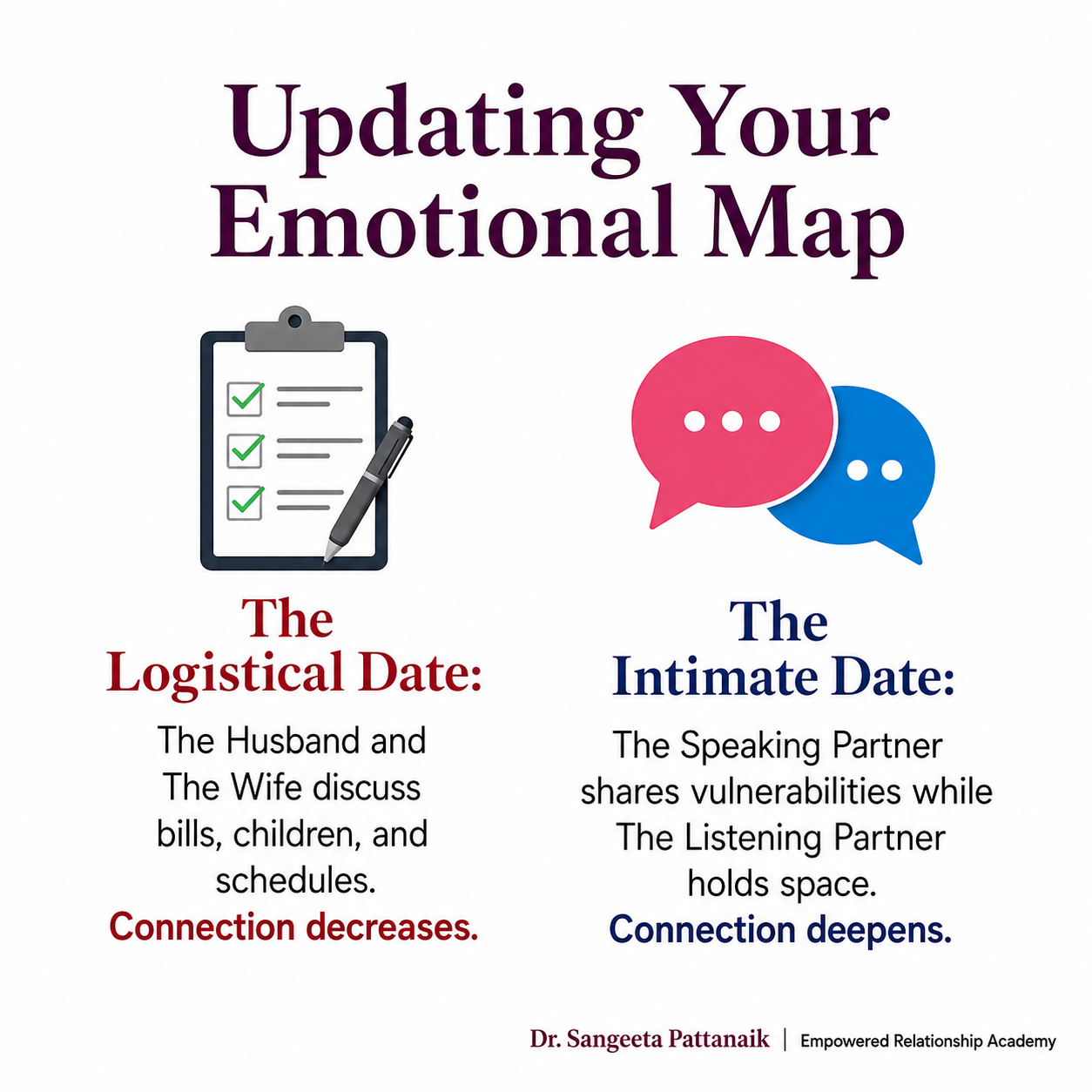
When you spend your date night operating as administrative co-managers rather than romantic lovers, the emotional distance between you only widens. To cure this relational apathy, you must intentionally reintroduce curiosity back into your marriage. Utilizing structured questions to build intimacy is a scientifically proven method to bypass the mundane logistics of daily life and access your partner's hidden emotional landscape.
Let us explore the psychology of why we stop asking questions, establish the ground rules for your next date night, and unpack ten clinical questions guaranteed to reignite your emotional and romantic connection.
1. The Psychology of Apathy: Why We Stop Asking Questions
After living with the same person for a decade, your brain convinces you that you already know everything there is to know about them. You assume you know exactly how your husband will react to a stressful situation, or exactly what your wife thinks about a specific political topic.
The Illusion of Knowing
In relationship psychology, there is a dangerous phenomenon known as The Illusion of Knowing. Because the human brain seeks cognitive efficiency, it stops asking questions. But human beings are not static monuments; we are dynamic, ever-evolving emotional ecosystems. The woman you married at twenty-five is not the exact same woman sitting across from you at thirty-five. The man who enthusiastically built a career at thirty has different fears and insecurities at forty.
When you stop asking deep questions, your internal "map" of your partner becomes severely outdated. You are interacting with a ghost of who they used to be, entirely missing the person they have become today.
2. The 3 Clinical Ground Rules for Your Date Night
Before you ask a single question, you must create an environment of absolute psychological safety. If your partner feels like they are walking into an interrogation, a trap, or a performance review, their nervous system will instantly trigger a defensive wall.
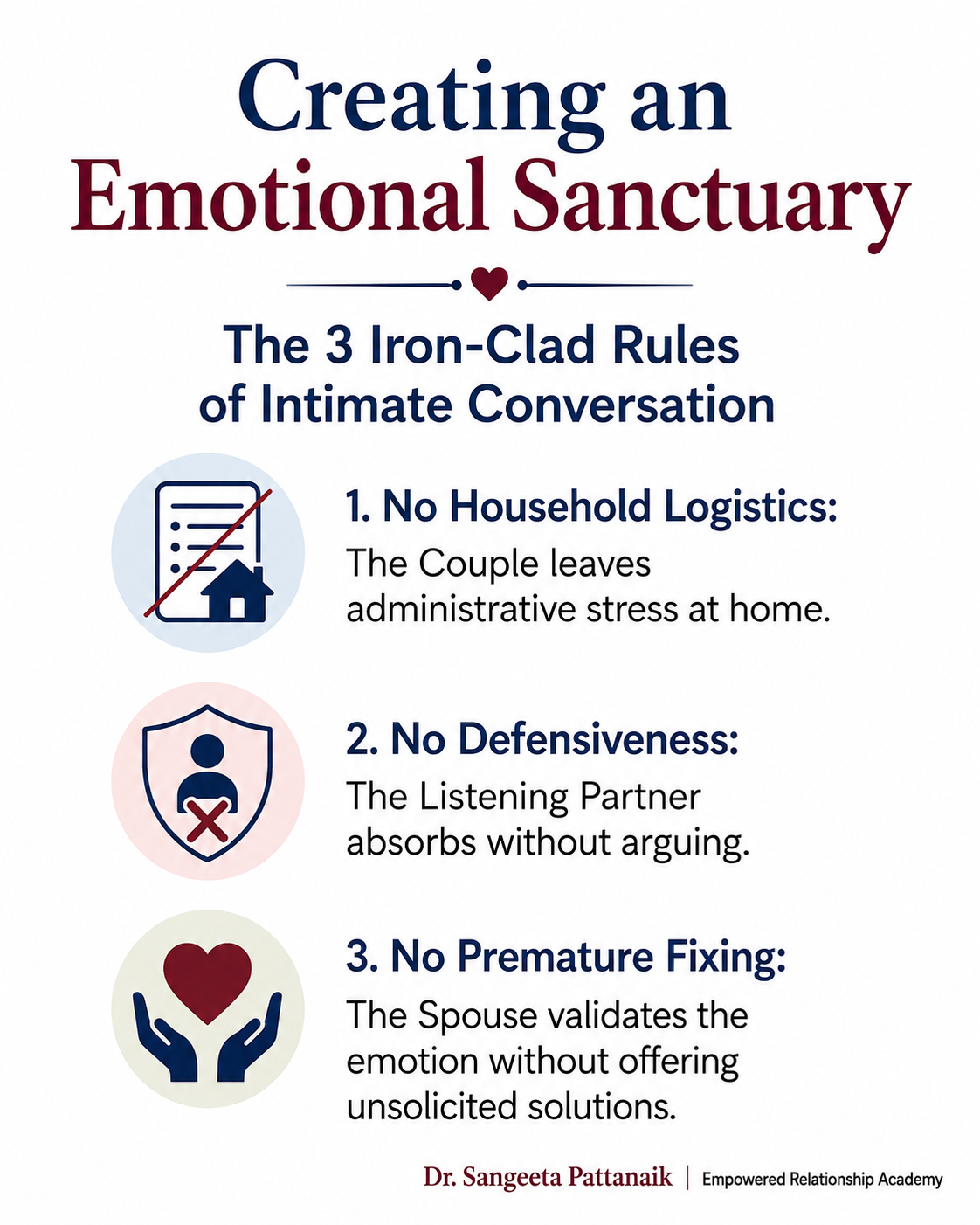
Commit to these three strict rules before your dinner begins:
Rule 1: The "No Logistics" Mandate
For the next two hours, discussing the children, household chores, extended family drama, or financial stress is strictly forbidden. If the conversation drifts toward logistics, gently pause and say, "Let us save the household planning for tomorrow morning. Tonight is just about us."
Rule 2: Suspend All Judgment
When your partner answers a vulnerable question, you are strictly forbidden from getting defensive, correcting their memory, or arguing. Your only job is to act as a safe emotional container. Even if their answer surprises or stings you, you must practice active listening.
Rule 3: Do Not "Fix" The Emotion
When your spouse shares a fear or an insecurity, do not offer unsolicited advice. Do not try to solve their psychological puzzle. Simply listen, validate their feelings, and thank them for being courageous enough to share their heart with you.
3. 10 Deep Questions to Build Intimacy
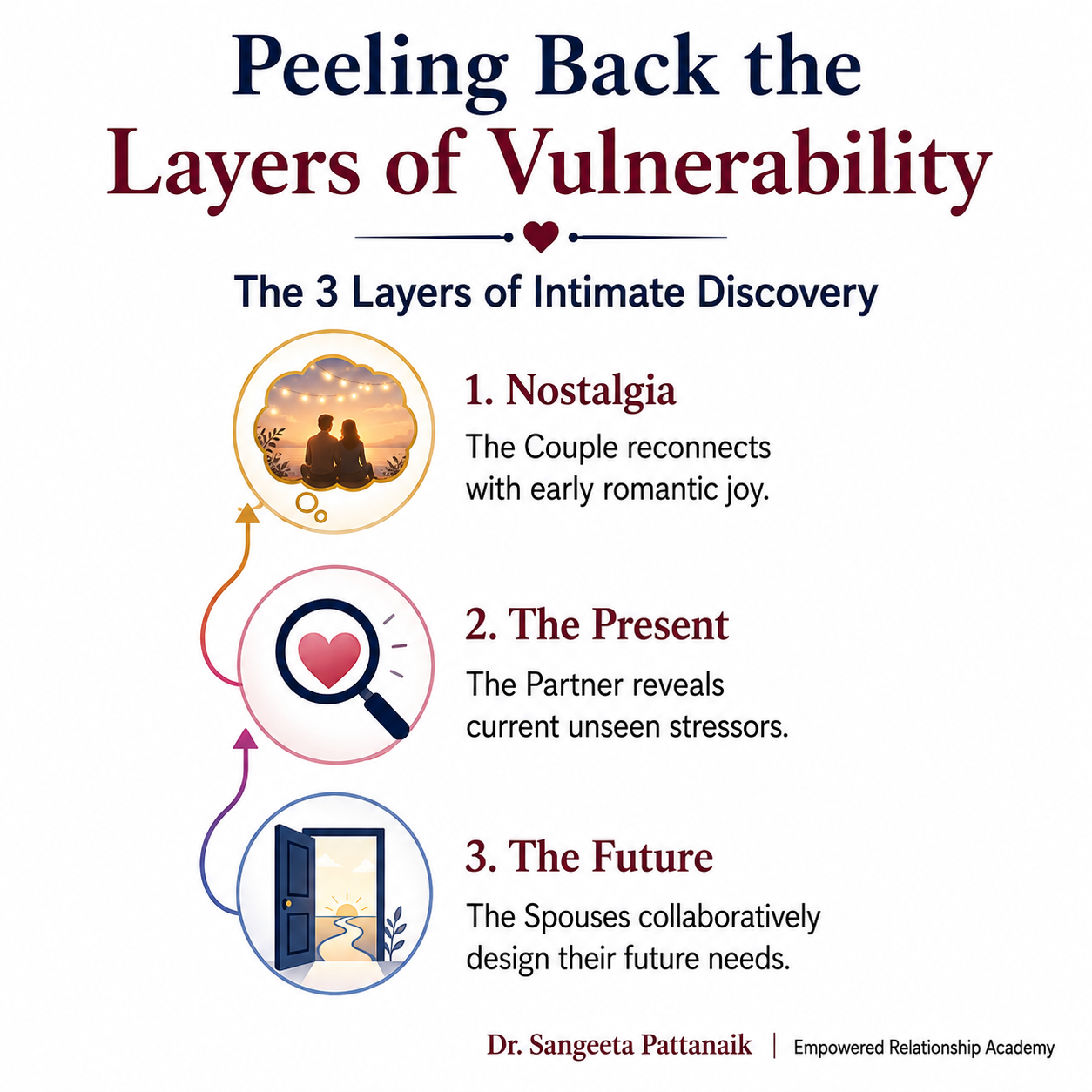
These questions are clinically designed to move from gentle nostalgia into deeper, more vulnerable territory. Take turns asking these questions, and allow the conversation to flow naturally.
Category 1: Nostalgia and Romantic Reconnection
These questions remind your nervous systems of the initial joy, attraction, and safety you felt during the courtship phase.
Question 1: "When you look back at our very first year of dating or marriage, what is one specific memory that still makes you smile when you think about it?"
Question 2: "What was the exact moment you realized you were falling in love with me, and what was I doing in that moment?"
Question 3: "What is one physical or personality trait of mine that you were wildly attracted to when we met, that you still love today?"
Category 2: The Present Emotional Landscape
These questions update your emotional map of who your partner is today, uncovering the silent stresses and quiet joys they are currently experiencing.
Question 4: "What is a heavy stressor or silent pressure in your life right now that you feel I might not be fully noticing or understanding?"
Question 5: "When do you feel the most deeply loved, cherished, and seen by me in our daily routine?"
Question 6: "What is something you used to love doing for yourself that you feel you have completely given up since we started building our family?"
Category 3: Vulnerability and Future Architecture
These questions require profound psychological safety. They invite your partner to express unmet needs without fear of retaliation, while collaboratively designing a beautiful future.
Question 7: "Is there any specific habit or behavior I do that unintentionally makes you feel unappreciated or emotionally invisible?"
Question 8: "How do you feel our physical intimacy has evolved over the years, and what is one thing you deeply desire more of in that area?"
Question 9: "If we could instantly change one specific dynamic about how we handle arguments, what would you want us to do differently?"
Question 10: "When you close your eyes and imagine our life together ten years from now, what brings you the most excitement and peace?"
4. How to Handle a Difficult Answer
When you ask powerful questions to build intimacy, you must be prepared for the reality that not all answers will be wrapped in sugar. Your partner might express a painful truth—perhaps that they feel lonely in the marriage, or that a specific habit of yours causes them anxiety.
If this happens, you must suppress your biological urge to fight back. Remember, if you punish your partner for telling you the truth, they will never tell you the truth again.
The Non-Defensive Response
If the speaking partner shares something difficult, the listening partner must respond with absolute emotional regulation: "Thank you for being honest with me. I know that must have been hard to say. I didn't realize my actions were making you feel that way, and I am going to spend some time reflecting on how I can do better for us."
This level of mature, non-defensive response acts as a powerful psychological healing agent. It teaches your spouse's nervous system that their deepest, darkest truths are safe in your hands.
Curiosity is the Antidote to Disconnection
Let us conclude with a foundational clinical truth: The opposite of love is not hate; the opposite of love is apathy.
When you stop being curious about the soul sitting across from you at the dinner table, the marriage begins to slowly starve. But the moment you lean in, look deeply into their eyes, and ask a question that proves you genuinely care about their internal world, the emotional oxygen instantly returns to the relationship.

Your partner contains multitudes. There are fears they haven't spoken aloud, dreams they have buried, and desires waiting to be acknowledged. By utilizing these questions to build intimacy, you are not just making conversation; you are consciously choosing to fall in love with the person they have become today.
Take the First Step Before Your Date Night
The Emotional Invisibility Score™
Discover How Seen, Valued & Emotionally Connected You Feel In Your Relationship.
Asking vulnerable questions requires a foundation of emotional readiness. Before you sit across from your partner on your next date night, it is profoundly helpful to understand your own emotional baseline and exactly how deeply you currently feel connected. This 2-minute assessment calculates your emotional connection health and reveals the hidden emotional gaps in your marriage.
Discover Your Score NowTakes 2 Minutes • 100% Confidential • Instant Results
Frequently Asked Questions About Rebuilding Connection
Why do couples stop asking each other questions over time?
This is caused by "The Illusion of Knowing." Because the human brain seeks cognitive efficiency, it stops being curious and assumes it already knows everything about a long-term partner. This leads to treating your spouse like a static object rather than an evolving human being, which breeds emotional apathy and disconnection.
What topics should be strictly avoided on a date night?
To rebuild intimacy, you must implement a "No Logistics" mandate. This means completely banning conversations about children's schedules, household chores, electricity bills, financial stress, or extended family drama. If the conversation drifts into logistics, gently pause and redirect back to your personal relationship.
How should I react if my partner answers a question with something hurtful?
You must suspend all defensiveness. If your partner shares that a specific habit of yours makes them feel lonely or unappreciated, do not argue or try to "fix" it. Instead, validate their feelings non-defensively: "Thank you for being honest. I didn't realize I was making you feel that way, and I will reflect on how to do better."
How do structured questions help a marriage?
Structured questions bypass the superficial, day-to-day administrative talk that dominates most marriages. By moving through categories of nostalgia, current emotional landscapes, and future vulnerability, you force your nervous systems to reconnect and update your internal "map" of who your partner is today.