
7 Undeniable Signs You and Your Partner Need Couples Counseling
Recognizing the psychological red flags before your relationship reaches the breaking point.
By Dr. Sangeeta Pattanaik | Read Time: 9 Minutes
Every relationship has its peaks and valleys. It is completely natural to experience disagreements, miscommunications, and periods where you feel out of sync with your partner. The stress of modern life, career demands, and family responsibilities can test even the strongest marriages.
However, there is a distinct difference between a temporary rough patch and a deep-rooted, toxic pattern that is slowly eroding your foundation. When daily interactions become a source of anxiety rather than comfort, it is a clear indicator that the emotional safety in the relationship has been compromised.
The Psychologist’s Truth:
As a psychological professional, I often see couples who wait an average of six years from the onset of problems before seeking help. By then, their relationship is on the brink of collapse. The truth is, recognizing the early signs you need couples counseling can save you years of heartache and help you rebuild a stronger, more resilient bond. Marriage therapy isn't about pointing fingers; it’s about understanding hidden psychological dynamics, decoding communication errors, and uncovering unmet emotional needs.
If you are wondering whether professional relationship advice is the right step for you, here are seven undeniable signs that it is time to seek couples counseling, along with the psychological facts behind them.
The 7 Red Flags You Shouldn't Ignore
1. Your Communication Has Turned Toxic
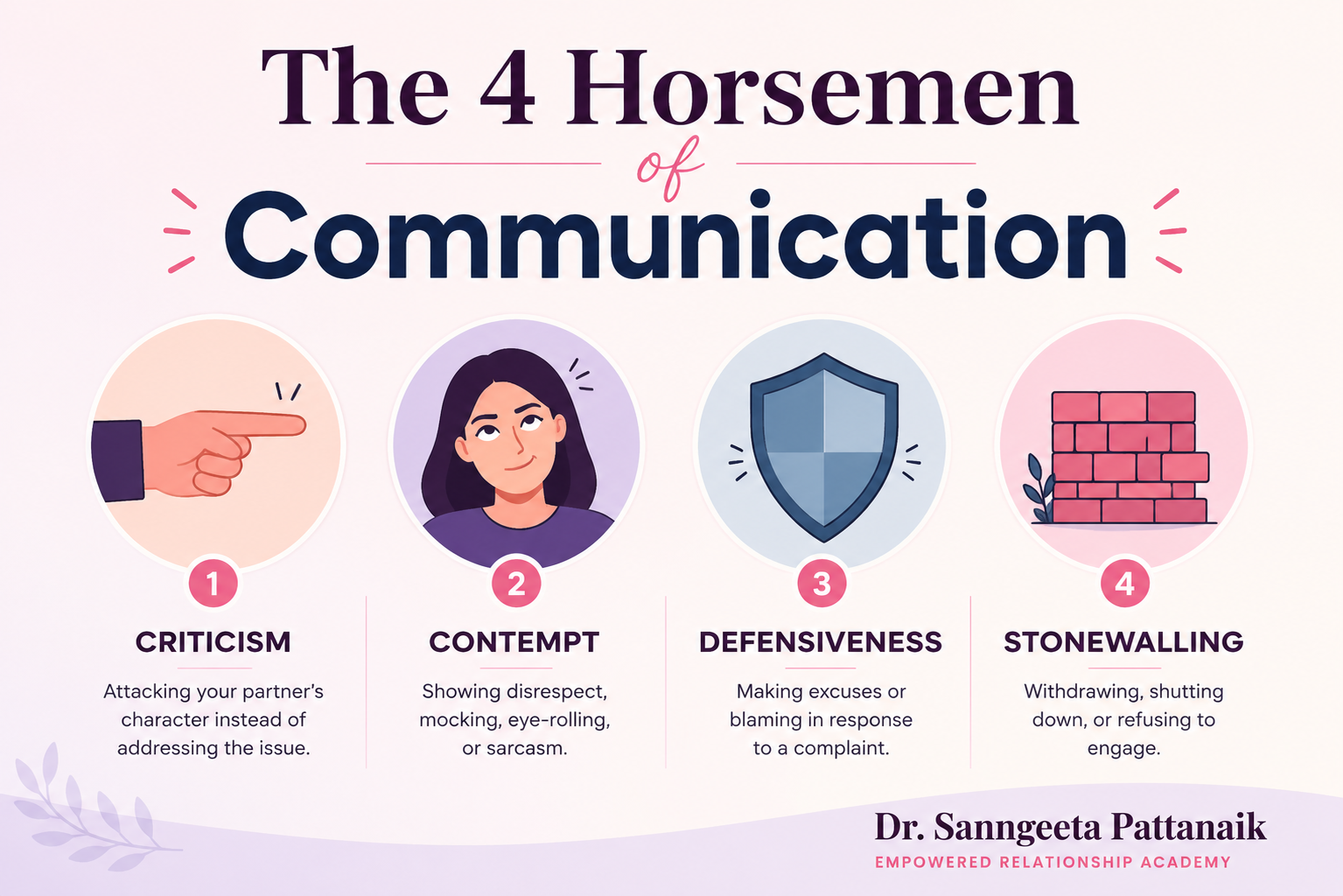
Communication is the lifeblood of any healthy relationship. When healthy debate transitions into hostile bickering, everything else in the marriage follows suit. Renowned relationship expert Dr. John Gottman identified four specific communication styles that can predict divorce and relationship failure with over 90% accuracy.
These toxic patterns replace empathy with hostility, making it impossible to resolve even the smallest disagreements.
- Criticism: Attacking your partner's core character instead of addressing a specific behavior (e.g., saying "You are so selfish," instead of "I felt upset when you didn't help with dinner.").
- Contempt: Acting morally superior, using heavy sarcasm, eye-rolling, mocking, or name-calling. Psychologically, this is the most destructive element because it directly conveys disgust toward your partner.
- Defensiveness: Playing the innocent victim to avoid taking any responsibility for your part in the conflict.
- Stonewalling: Emotionally and physically shutting down, withdrawing from the conversation entirely, and giving the silent treatment.
The Solution: Professional couples counseling helps intercept this toxic cycle. A trained relationship therapist will teach you how to express your frustrations using "I" statements without attacking, and how to actively listen without instantly throwing up a defensive wall.
2. You Keep Having the Exact Same Argument
Do you find yourselves stuck in an exhausting loop, having the exact same fight over and over again without ever reaching a meaningful resolution? Whether the argument triggers are about household chores, financial habits, parenting styles, or meddling in-laws, these recurring arguments are almost never about the surface-level topic.
When couples cannot break out of these repetitive arguments, it creates severe relationship burnout. You start to feel like you are walking on eggshells, avoiding certain topics entirely just to keep the peace.
🧠 The Psychological Fact: In marriage therapy, we call this perpetual conflict "Gridlock." Gridlock happens when underlying, fundamental needs, core values, or life dreams are not being met or validated by the other person. The fight about the unwashed dishes isn't actually about the dishes; it’s about one partner feeling deeply unappreciated or overwhelmed.
Couples counseling provides a neutral, mediated environment to dig beneath the surface. A therapist helps you address the root emotion and psychological need, rather than just putting a band-aid on the surface-level trigger.
3. You Feel Like Just "Roommates"
A thriving marriage requires both emotional and physical intimacy. If you find that you and your partner are simply co-existing—efficiently managing the household, paying the bills, and raising the kids, but failing to truly connect on a personal level—you have entered the dangerous "roommate phase."
Living parallel lives without shared hobbies, deep conversations, or date nights is a silent relationship killer. You may not be yelling or fighting, but the profound silence and emotional distance can be just as damaging as loud, explosive arguments.
🧠 The Psychological Fact: This phenomenon stems from emotional neglect and a gradual fading of attachment. When we stop being curious about our partner's inner world, our brains stop releasing oxytocin and dopamine (the vital bonding and reward chemicals). Without intentional effort, complacency takes over.
Therapy can help you rediscover each other. It forces you to pause your busy lives and dedicate focused time to rebuild the friendship that originally brought you together.
4. Trust Has Been Broken (And Not Just By Infidelity)
When people hear about "broken trust" or "betrayal" in a marriage, they almost always think of physical affairs. However, trust is the foundational pillar of a relationship, and it can be heavily fractured in many subtle, non-physical ways that still cause deep psychological trauma.
Emotional Infidelity
Seeking deep emotional support, intimacy, and validation from someone outside the relationship, often hiding these conversations from your partner.
Financial Secrecy
Also known as financial infidelity. This includes hiding major debt, making large secret purchases, or consistently lying about income and savings.
Micro-Betrayals
Constantly breaking small promises, lying about daily habits, or failing to show up when your partner needs you, which chips away at your reliability.
Once the foundation of trust is broken, trying to fix it alone often leads to a toxic cycle of paranoia, hyper-vigilance, and suspicion. One of the most critical signs you need couples counseling is the inability to move past a betrayal. A therapist provides a structured, safe space to process the betrayal trauma and lay out actionable, transparent steps for rebuilding trust.

5. Intimacy and Affection Have Completely Disappeared
Physical intimacy is often a direct barometer for the overall emotional health of a relationship. While it is entirely normal for sexual frequency to ebb and flow based on life's seasons—such as extreme work stress, aging, health issues, or having a new baby—a complete and prolonged absence of physical affection is a major red flag.
This doesn't just mean a lack of sex (often referred to as a "dead bedroom"). It also includes the disappearance of non-sexual physical touch, such as holding hands while walking, hugging after a long day, cuddling on the couch, or a simple kiss goodbye.
Psychologically, physical touch is essential because it drastically lowers cortisol (stress) levels and promotes emotional bonding. When intimacy disappears, it usually points to a deeper emotional disconnect, built-up resentment, or unspoken body-image insecurities. Counseling helps couples comfortably discuss their sexual and emotional needs without feeling ashamed, rejected, or awkward.
6. You Are Keeping a "Scorecard"
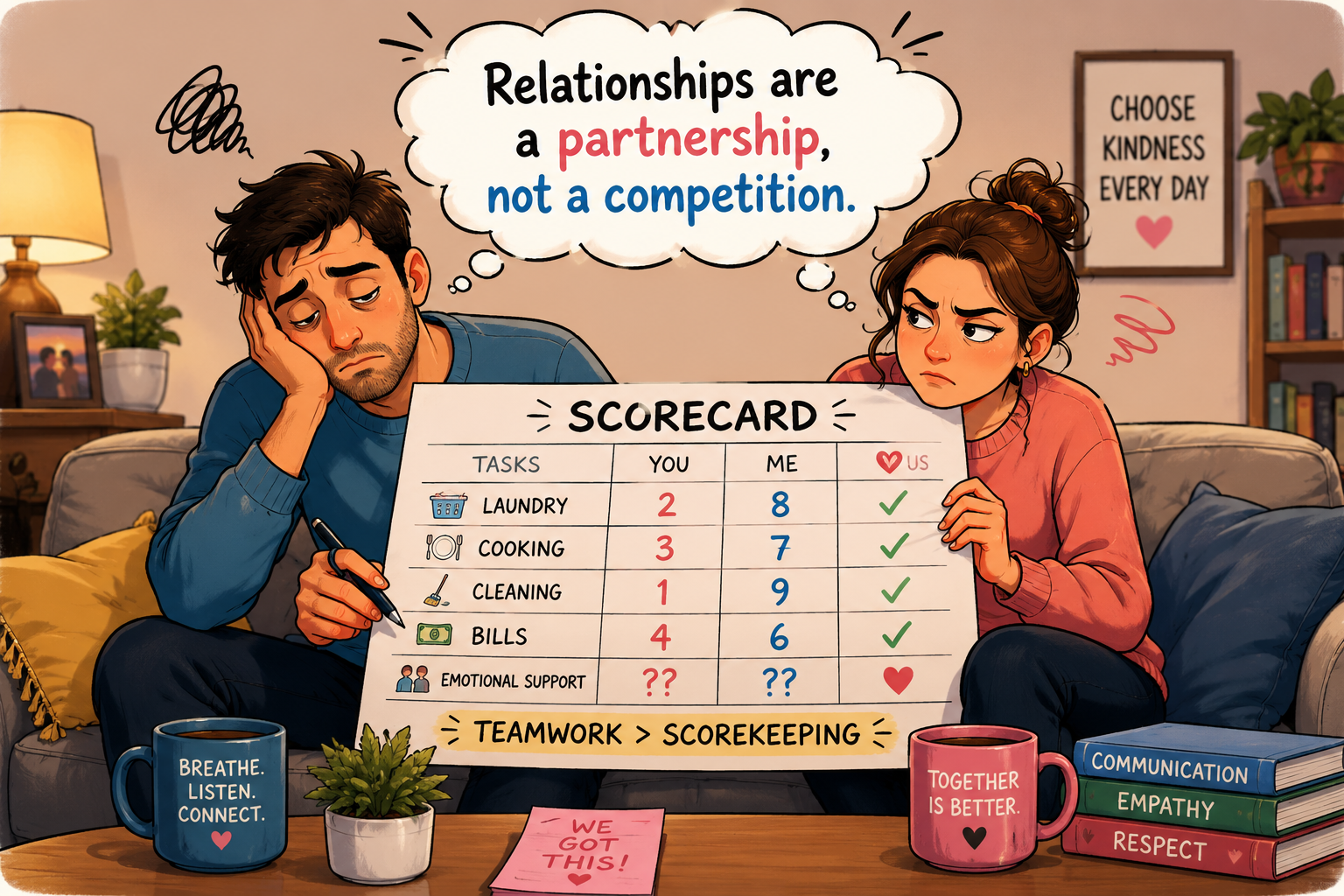
Are you secretly keeping a mental track of everything you do right in the relationship, and tallying up everything your partner does wrong? Do you catch yourself thinking things like, "I took out the trash and cooked three times this week, so they owe me a weekend off," or "I forgave them when they were late last month, so they have absolutely no right to be mad at me right now."
When you start calculating who does more for the household or who sacrifices more, you shift from being a unified team to being bitter rivals.
📝 The Psychological Fact: This highly transactional mindset is known in psychology as "scorekeeping." It is extremely dangerous because it breeds deep-seated resentment and kills mutual empathy. Healthy marriages are based on unconditional support and a "we" mentality, not a "me vs. you" competition.
If your relationship feels like a constant negotiation rather than a partnership, therapy can help dismantle this scorecard and shift the dynamic back to a collaborative, loving team.
7. You Are Actively Fantasizing About Leaving
It is perfectly normal for anyone to occasionally wonder "what if" or feel completely overwhelmed during a heated moment or a bad week. However, if you find yourself frequently and peacefully daydreaming about living alone, browsing apartments online, downloading dating apps just to "look," or imagining how much easier life would be without your partner, you are experiencing severe relationship burnout.
This is often a sign of emotional detachment. When your brain starts actively planning an exit strategy or visualizing a separate future, you are already mentally checking out of the marriage.
Before making any permanent, life-altering decisions like filing for divorce, couples counseling is absolutely essential. Therapy offers a judgment-free space to explore these feelings honestly. A counselor can help you determine whether this desire to leave is a temporary reaction to current, fixable stressors, or if the relationship has genuinely run its course and it is time to part ways amicably.
Taking the Next Step: Healing is Possible
Admitting that your relationship needs professional help is not a sign of failure; it is a profound act of courage and commitment. Therapy is not a magic wand, but it provides the exact psychological toolkit you need to break bad habits, communicate effectively, and fall back in love.

Don't Wait Until It's Broken
Book a 1-on-1 Online Couples Counseling Session with Dr. Sangeeta Pattanaik.
Book Your Session Now🔒 100% Private • Zoom/Video Call • Pan-India
Frequently Asked Questions
Is it ever too late for couples counseling?
It is rarely too late if both partners are willing to put in the necessary emotional work. Even if you are dealing with years of deep resentment, emotional neglect, or severe infidelity, professional intervention can help untangle the issues. However, the sooner you start therapy, the easier and faster the healing process will be.
What if my partner refuses to go to marriage therapy?
You cannot force someone into couples counseling, but you can seek individual relationship counseling for yourself. Often, when one partner learns new communication skills, sets healthy boundaries, and changes their reactions, the dynamic of the entire relationship shifts positively.
Do we have to be legally married to seek relationship counseling?
Not at all! Couples therapy is highly beneficial for dating, cohabitating, and engaged couples as well (often called premarital counseling). Addressing communication styles, financial expectations, and conflict resolution early on builds a much stronger foundation for a future together.