
What Actually Happens in Your First Couples Therapy Session? Demystifying the Process
Step inside the therapy room and discover the structured, psychological framework designed to restore safety to your relationship.
By Dr. Sangeeta Pattanaik | Read Time: 12 Minutes

As a clinical relationship therapist, I know that sitting in the waiting room before your very first couples therapy appointment can feel agonizing. Your heart might be racing, your palms might be sweating, and a storm of silent questions is likely spinning through your mind: "Are they going to tell us to divorce? Is the therapist going to take my partner's side? Are we going to spend an hour screaming at each other while a stranger watches?"
Let me take a deep, reassuring breath with you right now and dispel the anxiety.
A Safe Psychological Space
Stepping into my clinic is not stepping into a courtroom. I am not a judge, and you are not on trial. When couples search for what to expect in couples counseling, they often imagine melodramatic television portrayals where sessions erupt into chaos. In reality, professional relationship therapy is a deeply structured, scientifically grounded, and profoundly psychologically safe space.
Your first session is essentially an assessment and stabilization phase. To eliminate every ounce of mystery and anxiety, let me walk you step-by-step through exactly what happens during those initial 60 to 90 minutes inside the therapy room—and the psychological mechanisms we use to start healing your bond.
What to Expect: The 5 Phases of Your First Session
1. Establishing the "Therapeutic Container" and Ground Rules
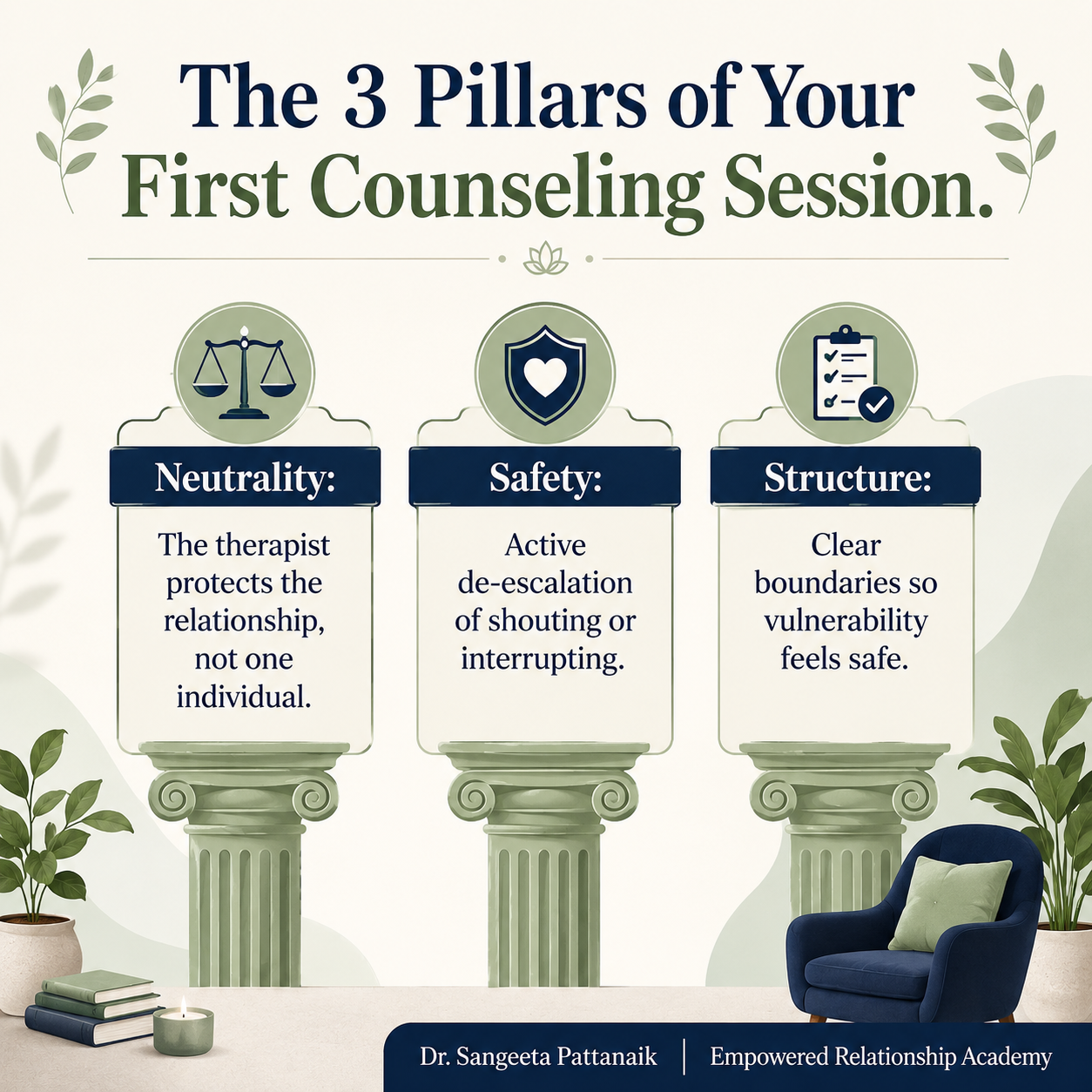
The very first thing we do when you sit down is create what psychologists call the Therapeutic Container. This simply means setting up clear emotional and logistical boundaries so that both of you feel protected enough to speak honestly without fear of being attacked or judged.
Before we even touch on your marital struggles, I will clearly outline our guidelines for safety:
Absolute Neutrality: I will explicitly state that my patient is not Partner A, nor is it Partner B. My patient is the relationship between you. My allegiance is entirely to the health of your bond. I do not take sides, assign blame, or declare "who started it."
The De-escalation Rule: If voices raise or harsh interruptions begin, I will step in immediately to guide the conversation. You are paying a professional to interrupt your habitual negative loops, not to watch you repeat them.
Confidentiality & "No Secrets" Policies: We explain how information is kept strictly confidential within the legal limits of psychotherapy, and how we handle private communications so that neither partner ever feels ambushed or betrayed by secret alliances.
2. Uncovering the "Presenting Problem" vs. The Core Dynamic
Once our safety rules are established, I will invite both of you to share why you booked the appointment. In clinical terms, we call this asking for the Presenting Problem—the immediate, surface-level trigger that motivated you to seek professional help right now. I usually ask a simple question: "What brings you into our space today, and what hopes do you have for our work together?"
Each partner gets uninterrupted time to speak. During this phase, you might tell me that you fight about finances, household chores, intimacy, or in-laws. While I listen attentively to those details, my clinical ear is actually listening for something far deeper beneath the surface: your Relational Dynamic.
Translating Complaints into Attachment Needs
When couples describe their fights, therapists are observing patterns of nervous system interaction. Most often, we identify what emotion-focused therapists call the Pursuer-Distancer Dynamic:
The Pursuer
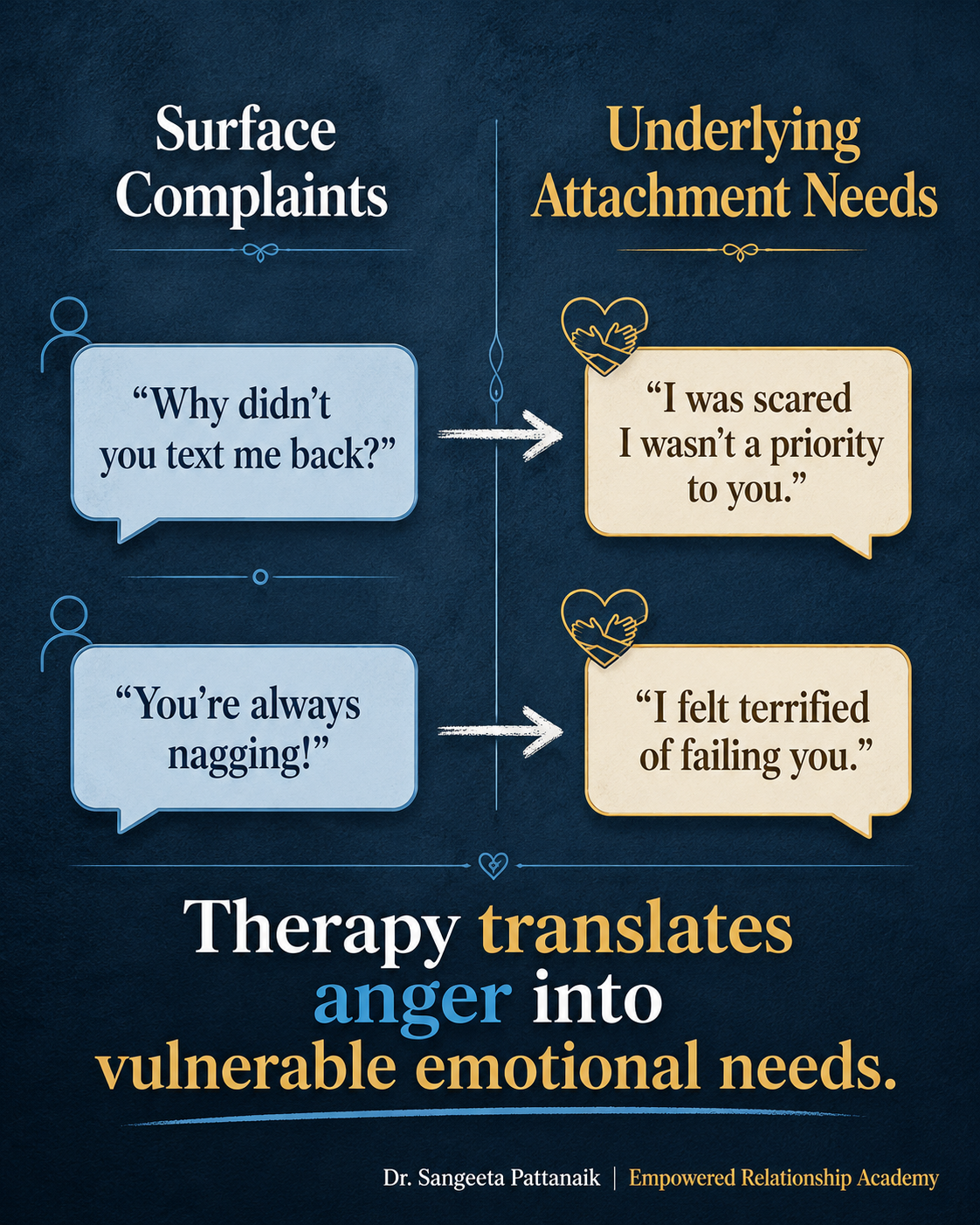
Responds to relationship stress by demanding attention, asking urgent questions, or criticizing. Beneath their anger lies an unfulfilled emotional need crying out: "Am I important to you? Are you really there for me?"
The Distancer
Responds to conflict by shutting down, going quiet, or leaving the room. Beneath their emotional withdrawal lies deep overwhelm and a fear of inadequacy crying out: "Nothing I do is ever enough, so it is safer for me to stay silent."
In your first session, I help translate your surface complaints about chores or tone of voice into these core human emotional needs. Suddenly, you aren't looking at an "angry spouse" or a "cold spouse"; you are looking at a partner who is hurting in their own unique psychological language.
3. Gathering Your Relationship History
You cannot truly understand where a relationship is going if you do not understand where it has been. About halfway through our first meeting, I will gently guide you through a brief historical assessment.
The Origin Story: How did you meet? What made you fall in love in the first place? Reconnecting with your initial attraction naturally floods the brain with positive memories and temporary dopamine, reminding you both that deep love exists beneath the current stress.
The Turning Point: When did things begin to shift? Was there a specific life stressor—such as the birth of a child, a career change, a geographical move, or broken trust—that placed heavy weight on your connection?
Family of Origin Blueprints: I will briefly ask about the households you both grew up in. Understanding how your parents handled emotional conflict gives invaluable psychological insight into why you instinctively react the way you do during stress.
4. Defining Actionable Treatment Goals
One of the greatest fears couples have regarding what to expect in couples counseling is that it will turn into an endless, unfocused cycle of weekly complaining without any tangible progress. A professional therapist prevents this by dedicating the final portion of your first session to clear Treatment Planning.
We transition from talking about your pain to defining your shared future. I will ask: "Six months from today, if our work together is wildly successful, what will your daily life look like at home?"
Translating Vague Hopes into Observable Behaviors:
• "We want to be able to disagree about our family budget without raising our voices or calling timeouts."
• "We want to implement a weekly date night where we can talk about personal feelings without getting defensive."
• "We want to rebuild physical intimacy so we feel like romantic partners instead of roommates."
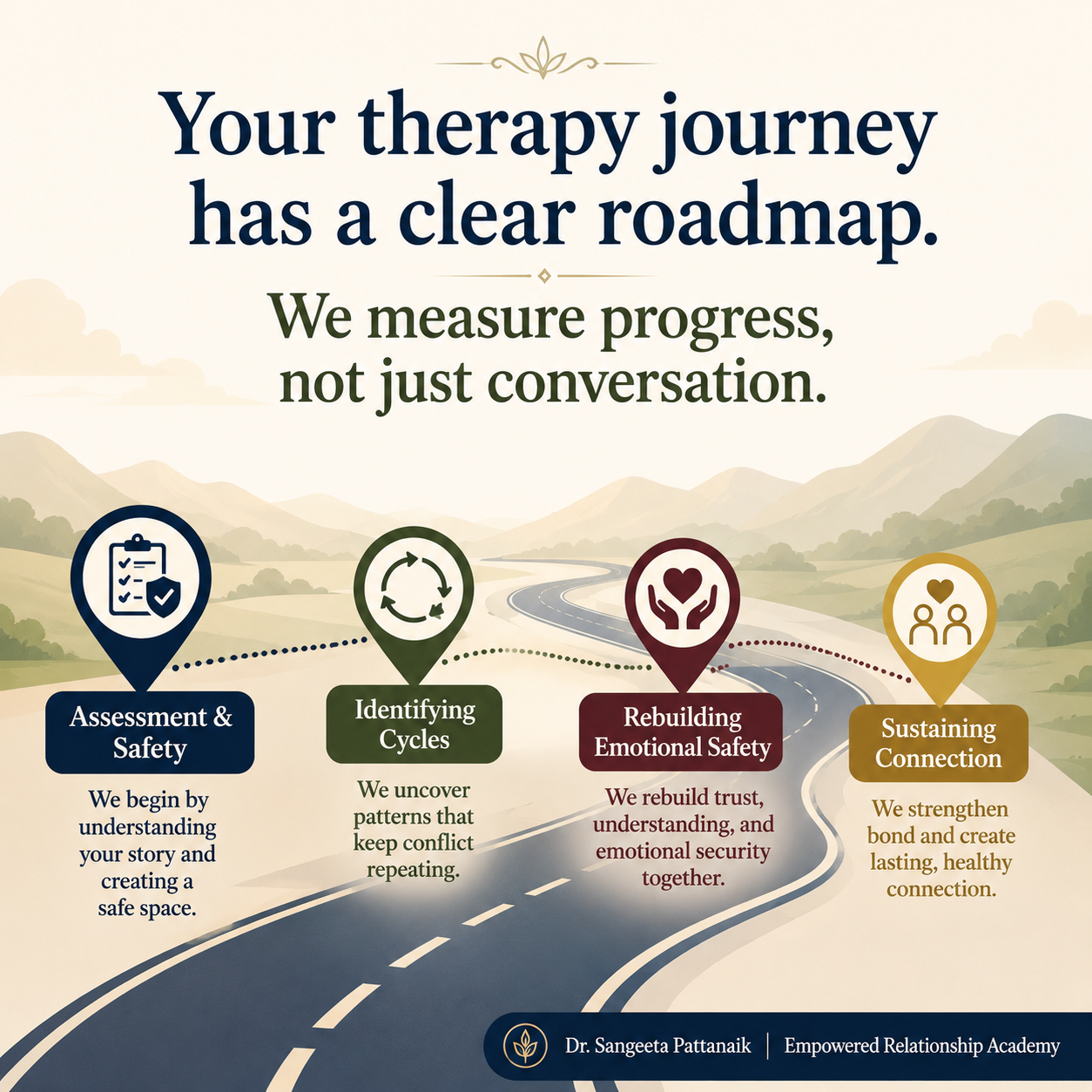
These specific benchmarks give our therapy a precise roadmap so we can measure real progress week after week.
5. What Does NOT Happen in Your First Session
To give you complete peace of mind, it is just as important to understand what will not occur during your initial appointment:
You will not solve years of marital problems in 60 minutes. Your relationship took months or years to develop these communication knots; untangling them safely requires patience. The first session is about mapping the terrain, not completing the journey.
You will not be forced to stay together or forced to separate. My ethical role is not to make life decisions for you. My role is to help you build psychological clarity, emotional safety, and healthy communication skills so that you can make wise, empowered decisions for your own lives.
You will not leave feeling attacked. A professional therapist ensures that both partners walk out of the door feeling respected, validated, and held with dignity.

The Courage to Begin
Taking the initiative to book a session and walk through a therapist's door is an act of profound courage and deep love for your partnership. Admitting that you need objective guidance is not a sign that your marriage is broken; it is a sign that your relationship is valuable enough to protect with expert tools.
When you know what to expect in couples counseling, the fear vanishes. You realize that you are entering a supportive environment designed specifically to translate your arguments into understanding, repair your emotional safety, and teach you how to become an unstoppable team again. You don't have to navigate the storm alone any longer—your roadmap to healing begins with that very first conversation.
Take the First Step Before Your Session
The Emotional Invisibility Score™
Discover How Seen, Valued & Emotionally Connected You Feel In Your Relationship.
Walking into your first couples therapy appointment feels significantly easier when you already have absolute clarity on where your relationship currently stands. This 2-minute assessment calculates your emotional connection health and reveals the hidden emotional gaps in your marriage.
Discover Your Score NowTakes 2 Minutes • 100% Confidential • Instant Results
Frequently Asked Questions About Couples Counseling
Will the couples therapist take my partner's side?
No. A professional clinical marriage therapist operates under absolute neutrality. The therapist's "patient" is not Partner A or Partner B—the patient is the relationship itself. The therapist's goal is to protect the health of your shared bond without assigning blame or picking winners.
What is the difference between a "Presenting Problem" and a "Relational Dynamic"?
The presenting problem is the immediate surface-level issue that brought you into therapy (such as arguments over chores or finances). The relational dynamic is the underlying subconscious psychological pattern—like the "Pursuer-Distancer" cycle—that drives how your nervous systems interact during stress.
Can couples therapy force us to get divorced or stay together?
Never. An ethical relationship therapist will not make major life decisions for you. Instead, counseling provides a safe psychological space, emotional clarity, and communication tools so that you and your partner can make empowered, healthy decisions for your own future.
How should we prepare for our first couples therapy appointment?
The best way to prepare is to reflect on your own internal feelings rather than building a list of complaints about your partner. Think about what specific observable behaviors you hope to improve over the next six months, and consider taking a relationship self-assessment beforehand to clarify your baseline goals.
Its really helpful