
Emotional Intimacy vs. Physical Intimacy: Why You Need Both to Sustain a Marriage
A clinical therapist breaks down the psychological architecture behind both forms of connection and how to rebuild them simultaneously.
By Dr. Sangeeta Pattanaik | Read Time: 14 Minutes

In my clinical practice as a relationship therapist, I often sit across from couples locked in a familiar, agonizing stalemate.
One partner sits on the far edge of the sofa, arms crossed, saying, "We haven't been physically intimate in months. I feel completely rejected and unwanted." The other partner sighs heavily, tears welling up, and replies, "How can you expect me to want physical intimacy when we haven't had a real conversation in weeks? I feel like an invisible roommate."
This is one of the most common dynamics in modern counseling. It represents a fundamental disconnect between two critical pillars of a thriving relationship: emotional intimacy and physical intimacy.
Many couples mistakenly believe these two forms of connection are separate or competing forces. One partner prioritizes physical touch as their primary gateway to feeling loved, while the other requires deep emotional safety before their body can respond. When these needs clash, couples enter a devastating loop of mutual resentment.
To build a marriage that is not just surviving, but deeply fulfilling, we have to understand the psychological architecture behind both types of intimacy. Let’s break down exactly what they are, why you cannot survive with just one, and how to rebuild both simultaneously without feeling overwhelmed.
1. What is Emotional Intimacy? (The Invisible Foundation)
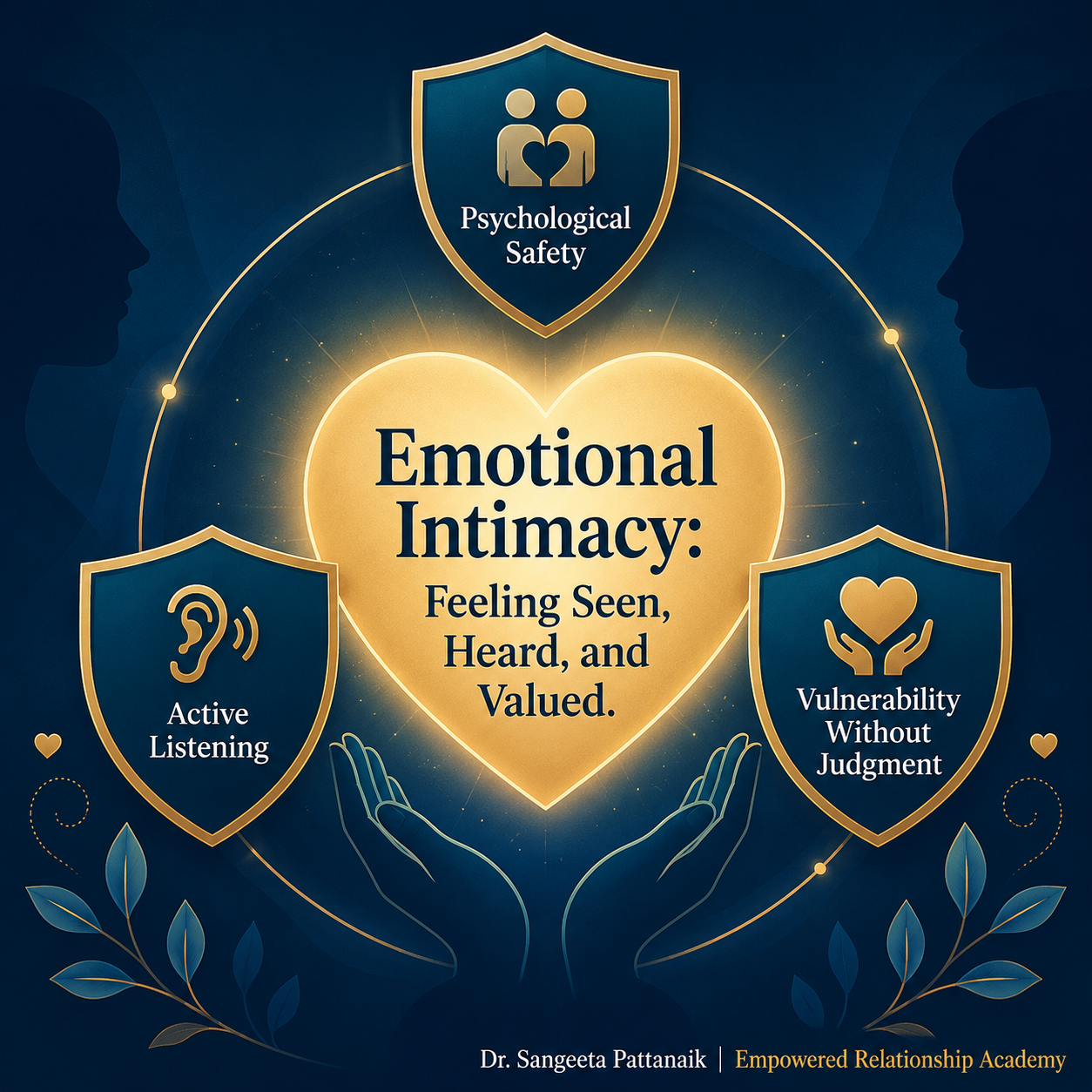
When we talk about emotional intimacy in marriage, we are referring to the psychological safety net that allows two people to share their absolute truest selves without fear of judgment, mockery, or rejection.
The Power of "Attunement"
In clinical psychology, true emotional intimacy relies on a concept called Attunement. Attunement is the ability to tune your emotional frequency to your partner’s wavelength. It means when your partner is distressed, excited, or fearful, you don't just hear their words—you deeply understand and validate their internal experience.
The Core Elements of Emotional Intimacy:
Psychological Safety
Knowing that your vulnerabilities, insecurities, and past mistakes will never be weaponized against you during an argument.
Emotional Safekeeping
Being the very first person your partner instinctively wants to call when they experience a triumph or a tragedy.
Active Curiosity
Continuing to ask deep, exploratory questions about your partner's inner world, recognizing that human beings evolve over time.
Without emotional intimacy, a relationship feels hollow. You might share a mortgage, children, and a social calendar, but inside your own mind, you feel profoundly isolated.
2. What is Physical Intimacy? (The Biological Connector)
Physical intimacy is often reduced simply to sexual intercourse, but as a therapist, I must clarify that sex is only one fraction of physical connection. Physical intimacy encompasses the entire spectrum of physical contact: holding hands, lingering hugs, kissing, resting your head on your partner's shoulder, and sexual affection.
From a neurological standpoint, physical touch is a biological necessity for relationship co-regulation. Nervous System Co-Regulation is a clinical term for how two nervous systems calm each other down through physical presence.
The Science of Touch
When you share affectionate, non-demanding physical touch with a safe partner, your brain releases a flood of powerful neurochemicals:
- Oxytocin: Known as the "bonding hormone," it fosters trust, attachment, and deep psychological warmth.
- Dopamine: The brain's reward chemical, which creates feelings of pleasure, excitement, and motivation to connect.
- Cortisol Reduction: Physical affection actively suppresses cortisol (the primary stress hormone), lowering blood pressure and signaling to your brain's alarm system that you are safe from harm.
Physical intimacy is the biological glue that separates a romantic partnership from a close friendship.
3. The Dangerous Loop: Why One Cannot Survive Without the Other
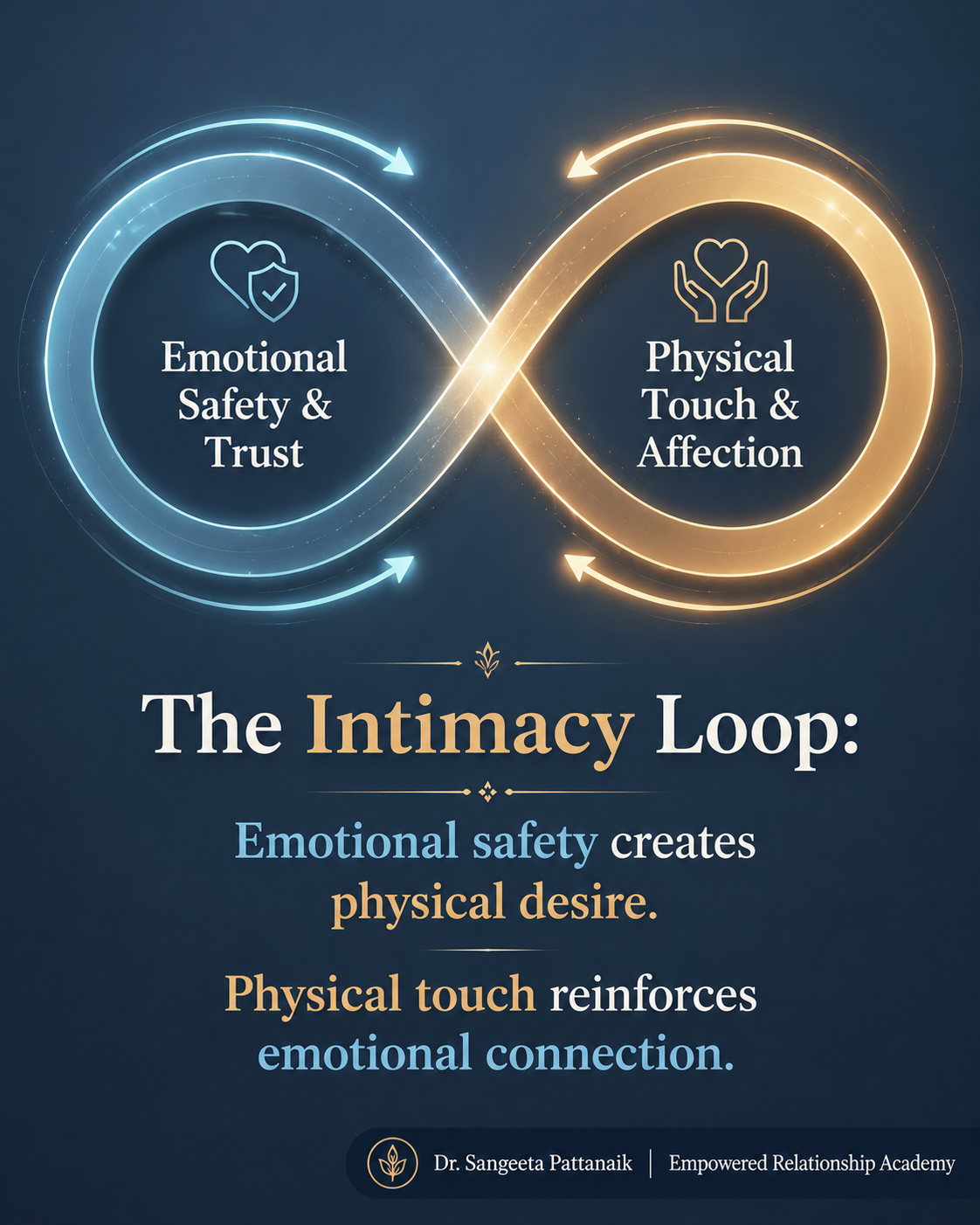
Here is the foundational clinical truth couples must understand: Emotional intimacy and physical intimacy are not separate silos; they are a continuous feedback loop.
In attachment psychology, we observe two distinct operational styles when relationships become stressed:
The Emotion-First Partner
Leans toward needing emotional safety, conversation, and perceived valuation before their body can experience sexual desire. If they feel ignored or reduced to a household manager during the day, their physical desire completely shuts down.
The Physical-First Partner
Experiences physical touch and sexual intimacy as their primary method of generating emotional closeness. When they feel physically disconnected, they experience it as profound emotional rejection, causing them to become anxious or withdrawn.
“I won’t touch you until you talk to me and show me emotional tenderness.”
VS.
“I won’t open up emotionally until you show me affection and prove you desire me physically.”
Both partners are starving for connection, but both are standing behind locked doors waiting for the other person to turn the key first.
4. The Two Traps: What Happens When You Only Have One?
To evaluate the health of your partnership, it helps to recognize the warning signs of an unbalanced relationship ecosystem.
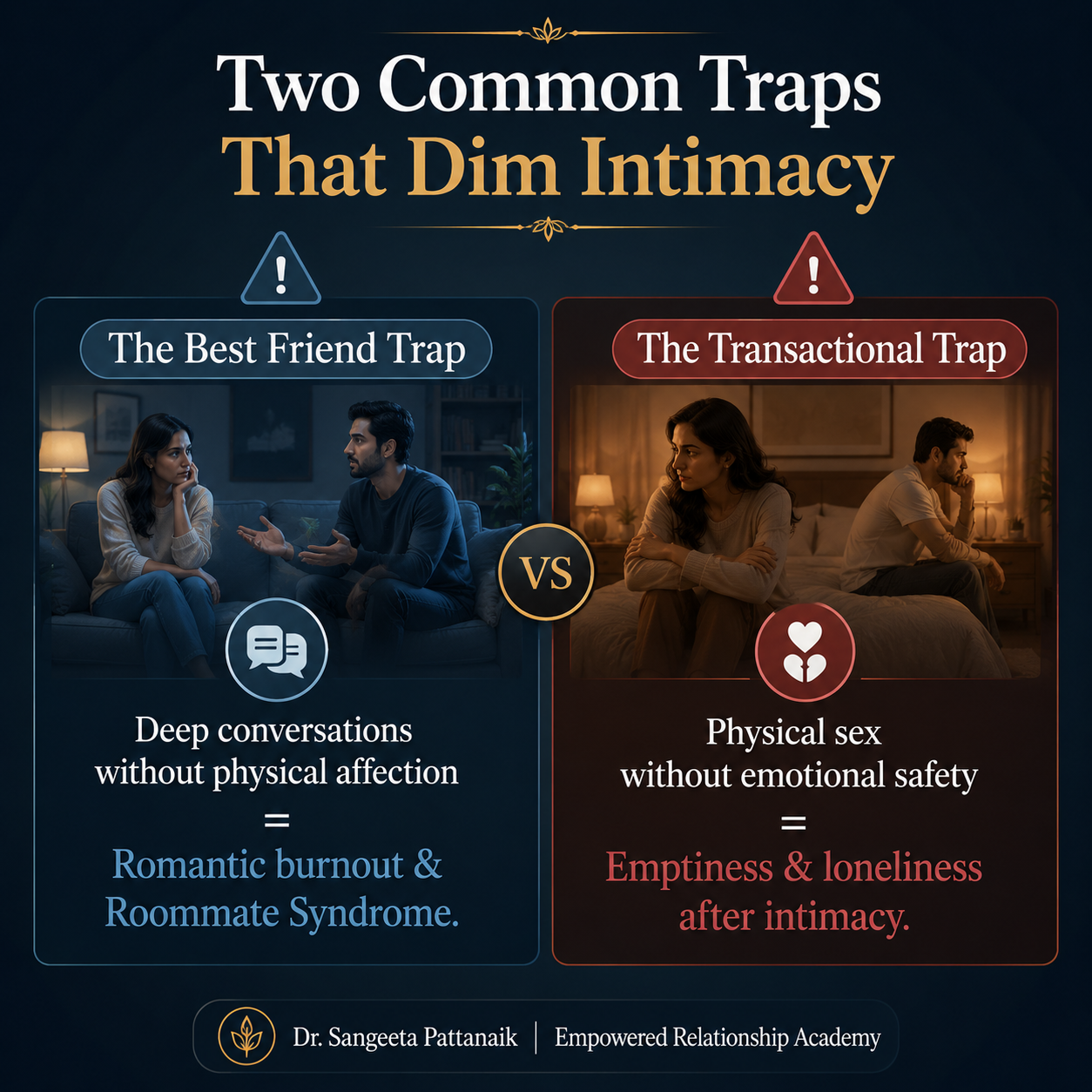
Trap A: Physical Intimacy Without Emotional Intimacy (The Transactional Trap)
When a couple engages in sexual intimacy without underlying emotional attunement, physical intimacy quickly feels mechanical or transactional.
The Symptoms: You might have regular sex, but there is no lingering physical affection afterward. Conversations remain superficial. One or both partners often feel empty, lonely, or emotionally used immediately following intimacy because their physical vulnerability was not met with emotional safety.
Trap B: Emotional Intimacy Without Physical Intimacy (The "Best Friend" Trap)
When couples possess deep emotional support but completely lack physical touch, they enter what therapists call the Roommate Syndrome.
The Symptoms: You love each other deeply, support each other's careers, and parent effectively together. However, your physical interactions resemble siblings or platonic roommates. Over time, the absence of physical affection erodes romantic vitality, leaving the relationship vulnerable to external affairs or profound romantic burnout.
5. How to Rebuild Both Simultaneously: A Therapist’s Roadmap
If your relationship is currently unbalanced, you do not need to wait for months of talk therapy before rebuilding touch, nor should you force physical intimacy when emotional resentment is high. You must repair the feedback loop simultaneously through intentional, low-pressure steps.
Step 1: Practice "Non-Demand Touch" Daily
To heal physical disconnection without triggering performance anxiety, decouple touch from intercourse. Commit to physical affection that has no expectation of leading to sex.
The Exercise: Implement the 6-Second Kiss or the 20-Second Hug every single day when leaving for work or returning home. Research proves that maintaining physical contact for at least 20 seconds is the biological threshold required to stimulate oxytocin release and calm the nervous system.
Step 2: The Daily 15-Minute Emotional Check-In
You cannot nurture emotional intimacy in marriage while staring at smartphones or managing household logistics.
The Exercise: Spend 15 minutes every evening sitting together without screens. The rule: You are not allowed to discuss bills, children's schedules, or household chores. Instead, ask open-ended vulnerability questions: "What felt draining for you today?" or "What is one thing on your mind lately that you haven't shared?" Listen to understand, never to problem-solve or judge.
Step 3: Speak Your Partner’s Intimacy Language First
True relationship maturity requires breaking the stalemate by giving your partner what they need first, rather than waiting to receive what you need.
- If your partner craves emotional connection, consciously initiate a vulnerable conversation or offer verbal validation before hoping for physical affection.
- If your partner craves physical touch, reach out and hold their hand, rub their shoulders during a movie, or sit close to them on the couch to signal physical safety.

Integrating Heart and Body
A truly resilient marriage does not ask you to choose between feeling deeply understood and feeling passionately desired. You deserve both. Emotional intimacy creates the sanctuary where physical intimacy can thrive without fear, and physical intimacy creates the biological bonding that makes deep emotional vulnerability possible.
When you commit to nurturing both pillars daily—through honest conversations and affectionate touch—you transform your marriage from a logistical partnership into an unbreakable, deeply nourishing union.
Take the First Step Before Your Session
Emotional Invisibility Score™
Discover How Seen, Valued & Emotionally Connected You Feel In Your Relationship.
Before making assumptions about your relational dynamics, take this quick, scientifically structured self-assessment. It calculates your emotional connection health and reveals the hidden emotional gaps in your marriage.
Discover Your Score NowTakes 2 Minutes • 100% Confidential • Instant Results
Frequently Asked Questions About Intimacy in Marriage
What is the difference between emotional intimacy and physical intimacy?
Emotional intimacy refers to the psychological safety net that allows partners to share their deepest thoughts, fears, and vulnerabilities without fear of judgment. Physical intimacy encompasses the biological connection through physical touch, ranging from hand-holding and hugs to sexual intimacy, which biologically regulates nervous systems and fosters emotional bonding.
Why do some people need emotional connection before physical intimacy?
In attachment psychology, "Emotion-First" partners require psychological safety, attunement, and verbal validation before their body can experience sexual desire. When they feel emotionally disconnected, ignored during the day, or overwhelmed by household responsibilities, their nervous system perceives vulnerability as unsafe, causing physical desire to shut down.
What is "Non-Demand Touch" in relationship therapy?
Non-demand touch is physical affection—such as holding hands, lingering 20-second hugs, or a 6-second kiss—that carries zero expectation or pressure of leading to sexual intercourse. It allows couples to restore biological nervous system co-regulation and oxytocin release without triggering performance anxiety or fear of rejection.
Can a marriage survive without physical intimacy?
When a marriage has emotional connection but lacks physical touch entirely, it often falls into "Roommate Syndrome." While couples may function well as parents or co-managers of a home, the prolonged absence of physical affection erodes romantic vitality and biological co-regulation, leaving the relationship vulnerable to burnout or external affairs over time.