
Is Sleep Divorce Healthy for Your Marriage?
In recent years, the term Sleep Divorce has become one of the most discussed relationship trends in psychology blogs, marriage counseling rooms, and even mainstream media. At first glance, the phrase sounds alarming. The word “divorce” immediately triggers anxiety, fear of separation, or assumptions about emotional distance. However, Sleep Divorce does not refer to the breakdown of a relationship. Instead, it describes a conscious decision by couples to sleep separately in order to improve sleep quality, protect mental health, and ultimately strengthen their relationship.
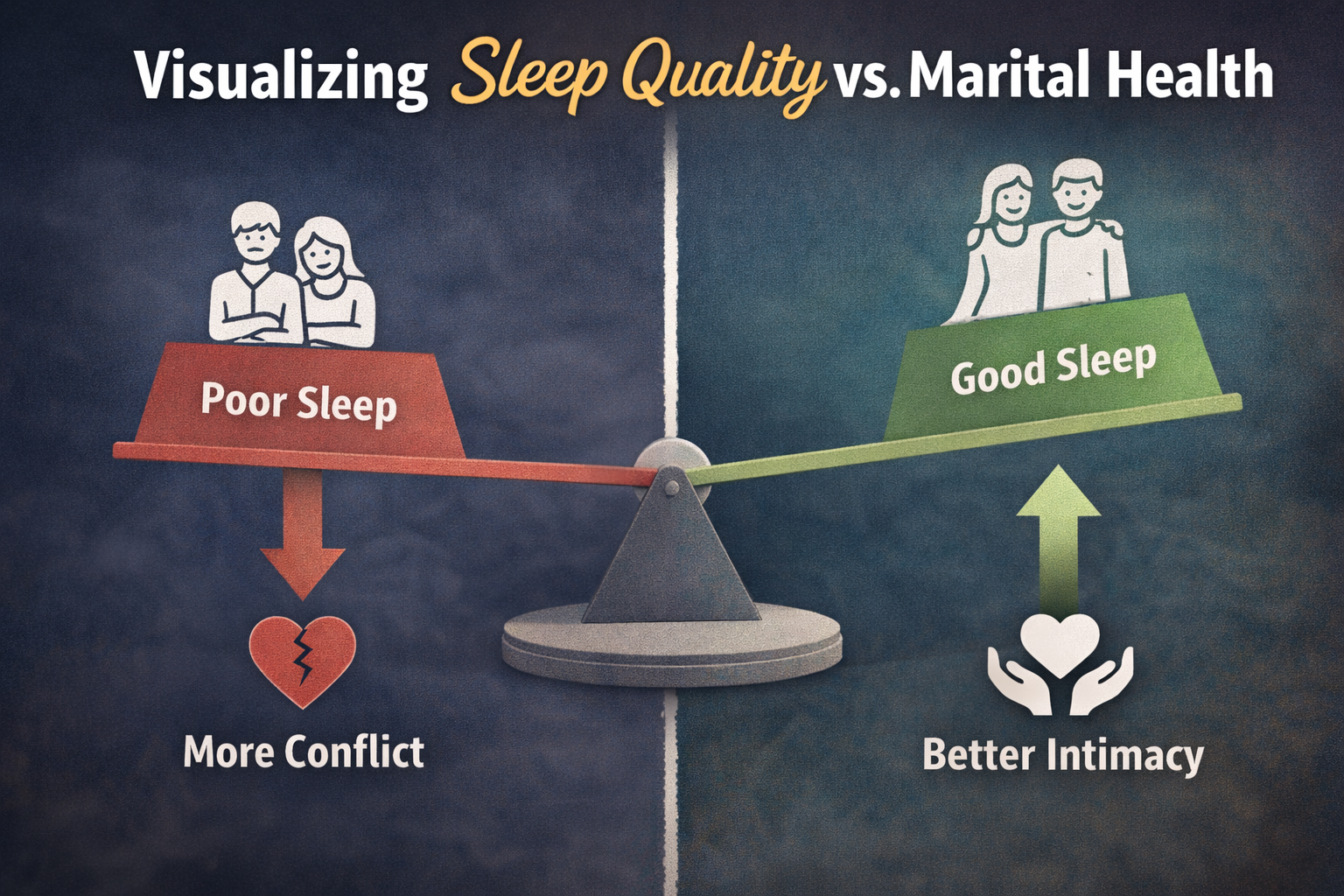
Visualizing Sleep Quality vs. Marital Health
As a psychologist, it is important to approach Sleep Divorce not as a trend, but as a phenomenon rooted in sleep science, relationship psychology, emotional regulation, attachment patterns, and marital satisfaction research. The real question is not whether couples should or should not sleep apart. The real question is this: Does sleeping separately enhance or damage emotional intimacy and long-term relationship health?
What Is Sleep Divorce?
Sleep Divorce refers to a mutually agreed arrangement in which partners sleep in separate beds or separate rooms to improve sleep quality. It is not a sign of emotional separation. It is a sleep strategy.
Couples may choose Sleep Divorce because of chronic sleep disturbances such as snoring, insomnia, sleep apnea, different work schedules, restless movement, temperature preferences, or incompatible sleep chronotypes. Over time, repeated disturbances lead to sleep deprivation, which begins to affect mood, communication, empathy, and patience. Sleep Divorce is therefore not about creating distance; it is about preventing resentment.
Why Sleep Matters for Love: The Neuroscience
Sleep is a biological necessity. It regulates emotional stability, cognitive clarity, and stress tolerance. When sleep suffers, relationships suffer.
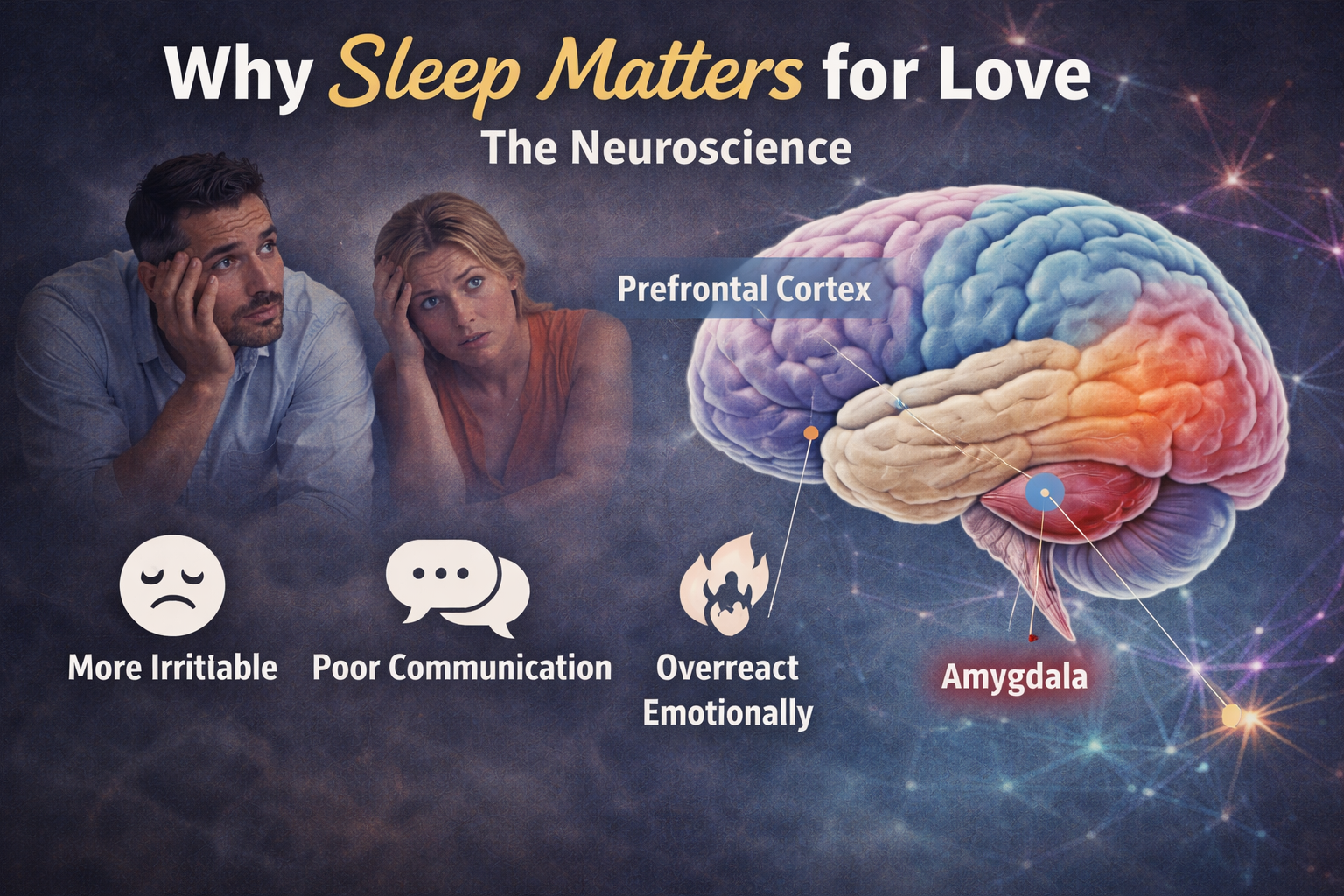
The Prefrontal Cortex & Emotional Regulation
Emotional Regulation and Brain Function
When individuals are sleep deprived, the prefrontal cortex (responsible for rational thinking) becomes less active, while the amygdala (the emotional alarm center) becomes more reactive. This imbalance leads to increased irritability and misinterpretation of neutral behaviors as negative. In couples therapy, it is common to observe that unresolved conflicts are amplified not by incompatibility, but by exhaustion.
Sleep and Conflict Patterns
Research shows that poor sleep predicts next-day conflict more strongly than daily stress. Without adequate sleep, emotional attunement declines. Sleep is directly linked to emotional intimacy and relational stability.
The Psychology of Shared Sleep
For many couples, sharing a bed represents closeness and romantic unity. However, it is important to separate symbolism from function. Physical proximity during unconscious sleep does not automatically guarantee emotional connection.
The Attachment Theory Lens
Individuals with anxious attachment styles may feel discomfort with Sleep Divorce because proximity feels reassuring. Those with avoidant attachment styles may feel relief but risk emotional disengagement. Success depends on communication and intentional connection during waking hours.
Potential Benefits & Risks
When approached intentionally, Sleep Divorce can produce several psychological and relational benefits:
- Improved Mood Stability: Rested partners are more patient and emotionally available.
- Mental & Physical Health: Reduces cortisol, anxiety, and depression risks.
- Intentional Intimacy: Physical closeness becomes a conscious choice rather than a routine.
- Reduced Resentment: Eliminates the anger built up from nightly sleep disruptions.
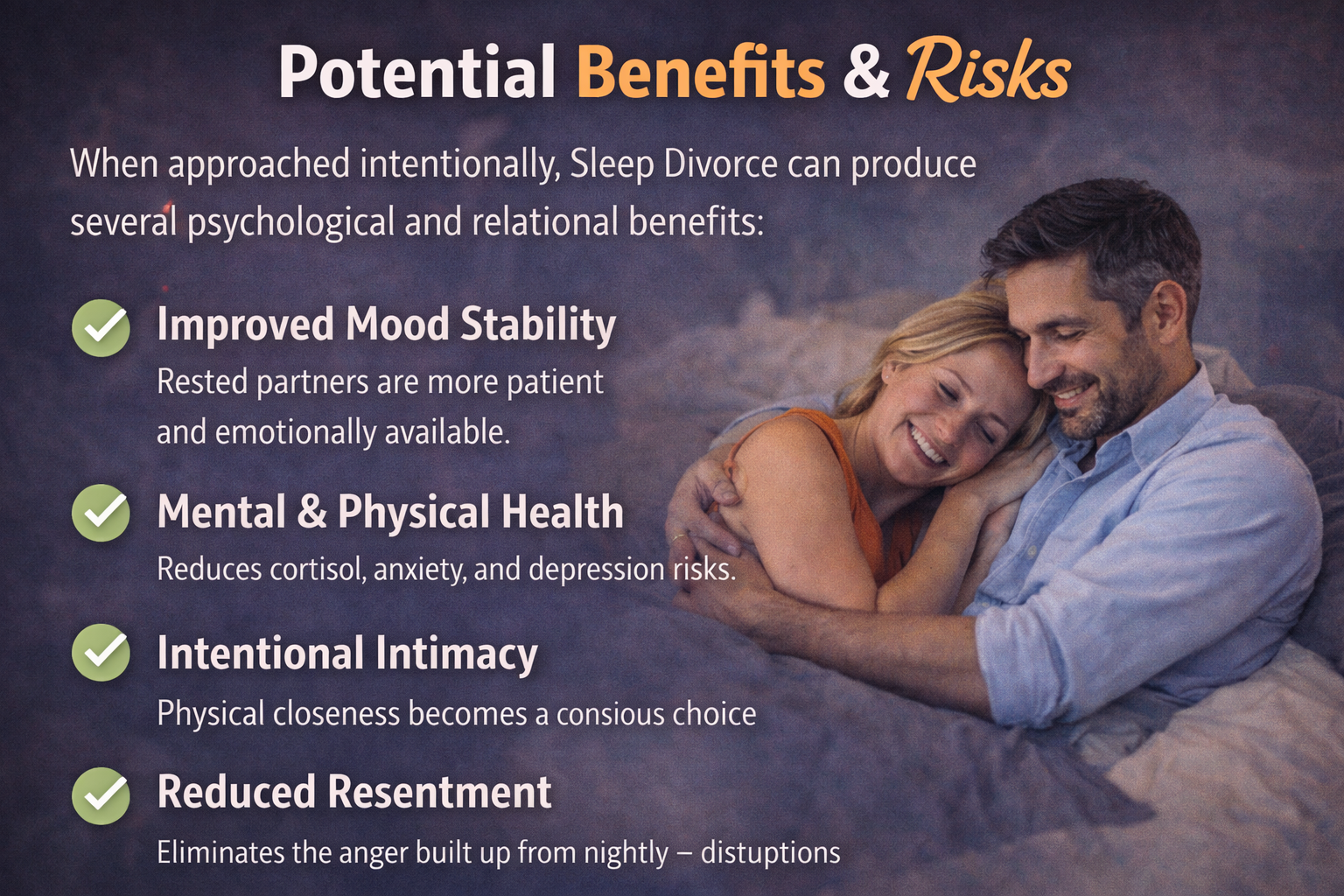
The Foundation of Trust & Rest
The Risks Involved
If introduced without open discussion, it may create feelings of rejection. There is also a risk of reduced spontaneous intimacy. If underlying conflicts already exist, Sleep Divorce may mask deeper issues rather than resolve them. It should not be used to escape emotional tension.
Communication: The Deciding Factor
The health of Sleep Divorce depends almost entirely on communication quality. Couples who benefit demonstrate:
- Mutual agreement rather than unilateral decision.
- Clear discussion of emotional concerns and reassurance of affection.
- Intentional time for intimacy.
- Periodic evaluation of the arrangement.
"Intimacy does not disappear because of separate bedrooms. It disappears because of emotional disconnection."
Sleep Divorce and Intimacy
One of the most common fears is that sleeping separately reduces sexual intimacy. However, research suggests that sexual satisfaction is more closely linked to emotional connection and communication than sleeping proximity. When partners choose to come together rather than default to nightly proximity, physical intimacy can become more deliberate and meaningful.
Who Might Benefit Most?
Sleep Divorce is particularly helpful for those dealing with chronic snoring, conflicting work schedules, parenting disruptions, or significant temperature and movement differences.
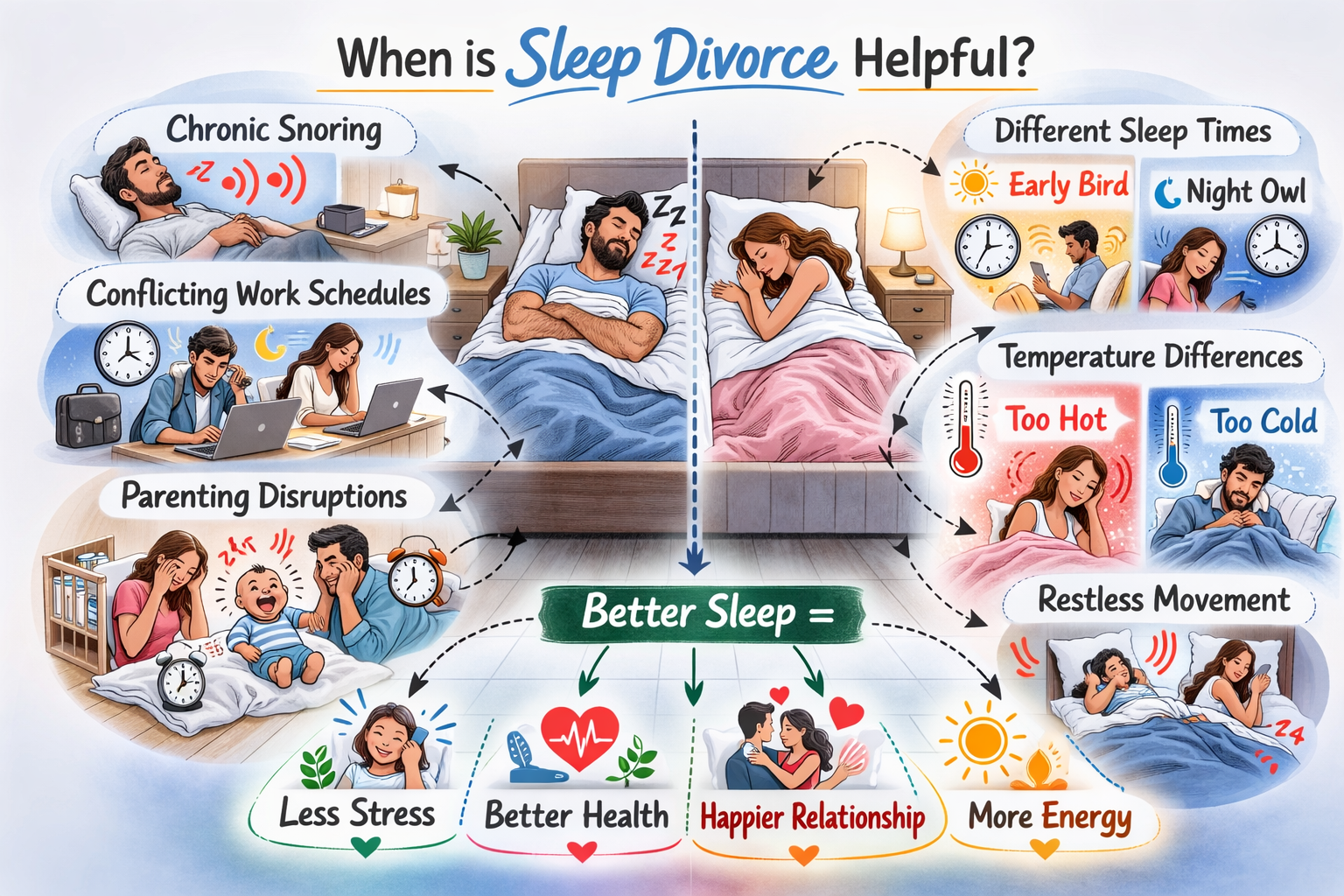
Focusing on Waking Connection
Final Reflection
Sleep Divorce is a tool. Its impact depends on intention. Emotional connection is built during waking hours, not during unconscious proximity. If better sleep allows you to show up as a calmer, more compassionate partner, then Sleep Divorce may not be a threat to your marriage—it may be an investment in it.
Protect Your Rest, Protect Your Love
Exhaustion doesn't have to define your marriage. Let's explore how to restore your connection through professional guidance.
Book Your Consultation with Dr. Sangeeta