
Blended Families: Navigating the Challenges of Remarriage
Dismantling the "instant family" myth, navigating complex loyalties, and building a clinical roadmap to a harmonious step-family.
By Dr. Sangeeta Pattanaik | Read Time: 12 Minutes

In modern India, the social stigma surrounding divorce and remarriage is steadily dissolving. More men and women are courageously choosing to leave toxic pasts behind to build beautiful, healthy second marriages. However, when children from previous relationships are brought into this new union, couples face a unique, intensely complex psychological landscape.
When you marry an individual who already has children, you do not just get a new spouse; you instantly inherit a deeply entrenched biological ecosystem, a history of past grief, and a web of complex loyalties.
Many newly remarried couples enter their home expecting an "instant family." They believe that because the husband and the new wife love each other deeply, the children will naturally fall into line, and love will seamlessly conquer all. When this fairy tale shatters—when the step-daughter screams, "You are not my real mother!" or when the biological father becomes highly defensive of his son’s misbehavior—the new marriage quickly deteriorates into a battlefield of resentment and tears.
The Reality of the Transition
As a clinical relationship therapist, I must validate your exhaustion: Blending a family is one of the most difficult psychological transitions a human being can undertake. It is entirely normal to feel overwhelmed, rejected, and frustrated. This is exactly why specialized blended family counseling is often the vital bridge between a failing remarriage and a thriving step-family.
Let us dismantle the cultural myths of the "instant family," understand the profound neurological loyalties of children, and build a clinical roadmap to harmony.
1. The Myth of the "Instant Family" (And the Timeline of Reality)
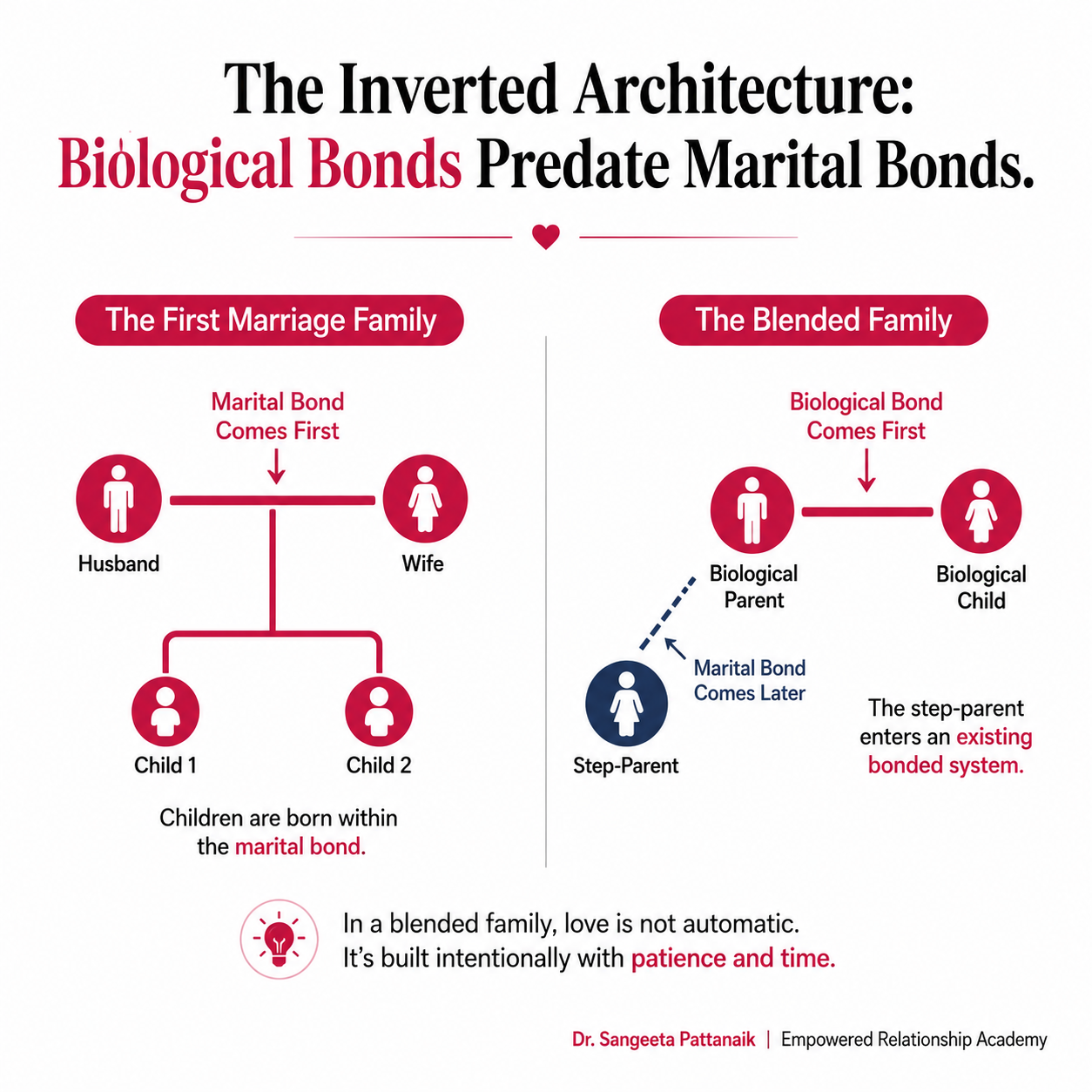
The most destructive assumption couples make in a remarriage is expecting immediate familial harmony. In a first marriage, the husband and wife have years to build their romantic bond before a child enters the picture. The marital bond is the foundational root.
In a blended family, the architecture is entirely inverted. The biological parent-child bond predates the new marital bond.
The biological mother and her children share years of private history, inside jokes, and shared trauma from a divorce or the loss of a parent. When a step-father enters this closed system, he is essentially an outsider attempting to board a moving train.
The Clinical Timeline of Blending
Research in family psychology indicates that a step-family does not truly stabilize and integrate for four to seven years. Expecting a step-mother and a step-son to share deep, unconditional love within the first six months is a psychological impossibility.
During the initial years, the step-parent must act more like a respectful, welcoming guest or a supportive camp counselor, rather than a demanding authority figure. Attempting to force the title of "Mother" or "Father" onto a grieving child only breeds intense rebellion and alienation.
2. The Danger of the "Discipline Trap"
One of the most frequent reasons couples seek blended family counseling is the explosion of conflict surrounding household discipline.
When a step-father observes his new step-son acting disrespectfully toward the biological mother, the step-father’s natural instinct is to step in, raise his voice, and enforce discipline to protect his new wife. This well-intentioned intervention is a massive clinical mistake.
Why Step-Parents Must Never Be the Primary Disciplinarians
Until a step-parent has spent years building a profound reservoir of trust, affection, and emotional safety with a step-child, they possess absolutely no psychological authority to discipline that child.
If a step-mother attempts to punish or scold a step-daughter, the step-daughter’s brain does not process the lesson; her brain only registers an attack from an outsider. The step-daughter will instantly run to the biological father for protection, forcing the biological father to choose between defending his child or defending his new wife. This dynamic violently fractures the marriage.
The Biological Parent's Role
The Absolute Enforcer
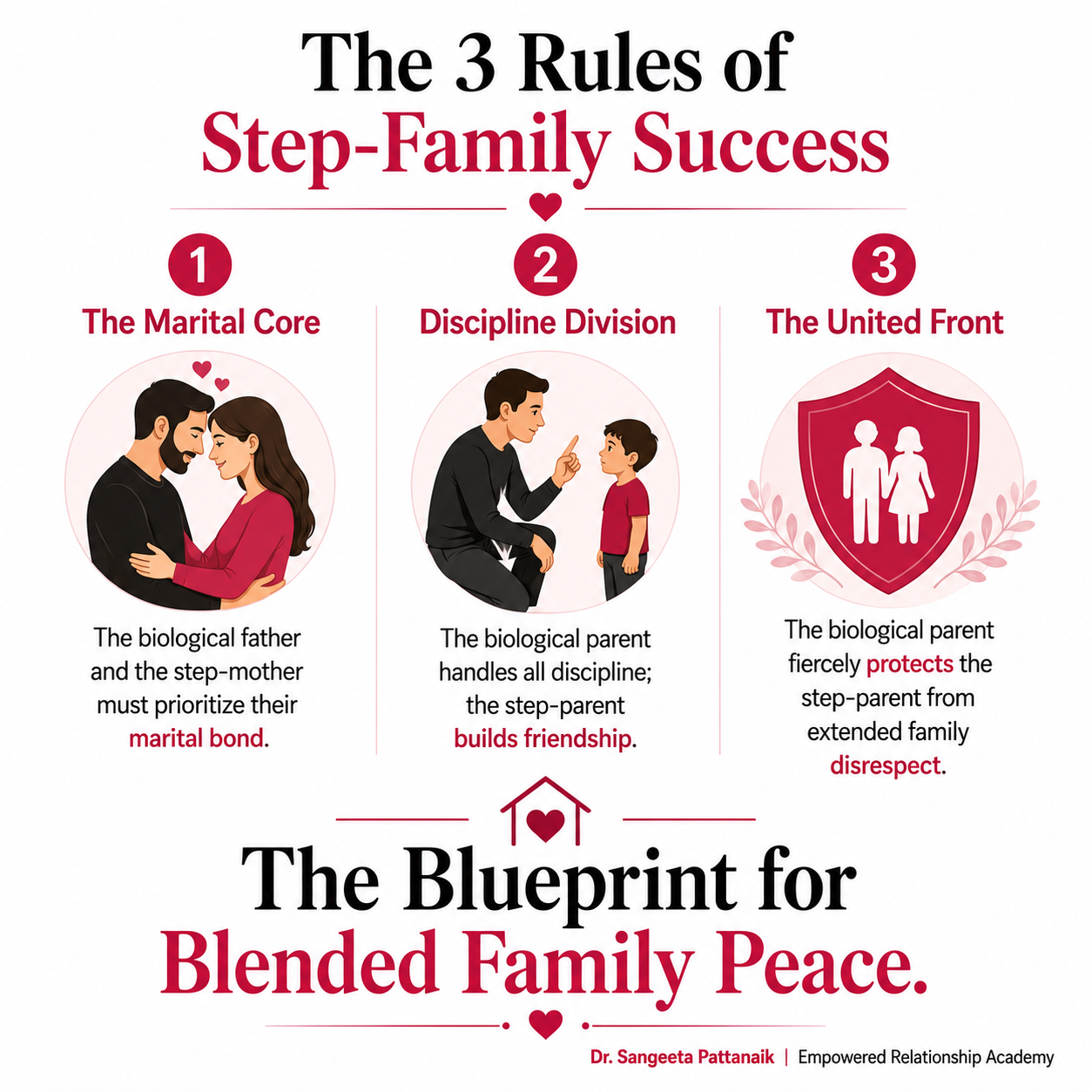
The biological parent must act as the absolute, undisputed enforcer of all household rules, consequences, and disciplinary actions for their own biological children.
The Step-Parent's Role
The Ally & Mentor
The step-parent must act as an ally, a mentor, and a friend. They focus exclusively on connection, monitoring behavior, and communicating privately with the biological parent. (e.g., "I see homework isn't done. I will discuss this with your father when he gets home.")
3. Understanding the Child: The Agony of the "Loyalty Bind"
When blending a family, adults often focus on their own exhaustion, completely missing the profound, invisible psychological agony the children are experiencing.
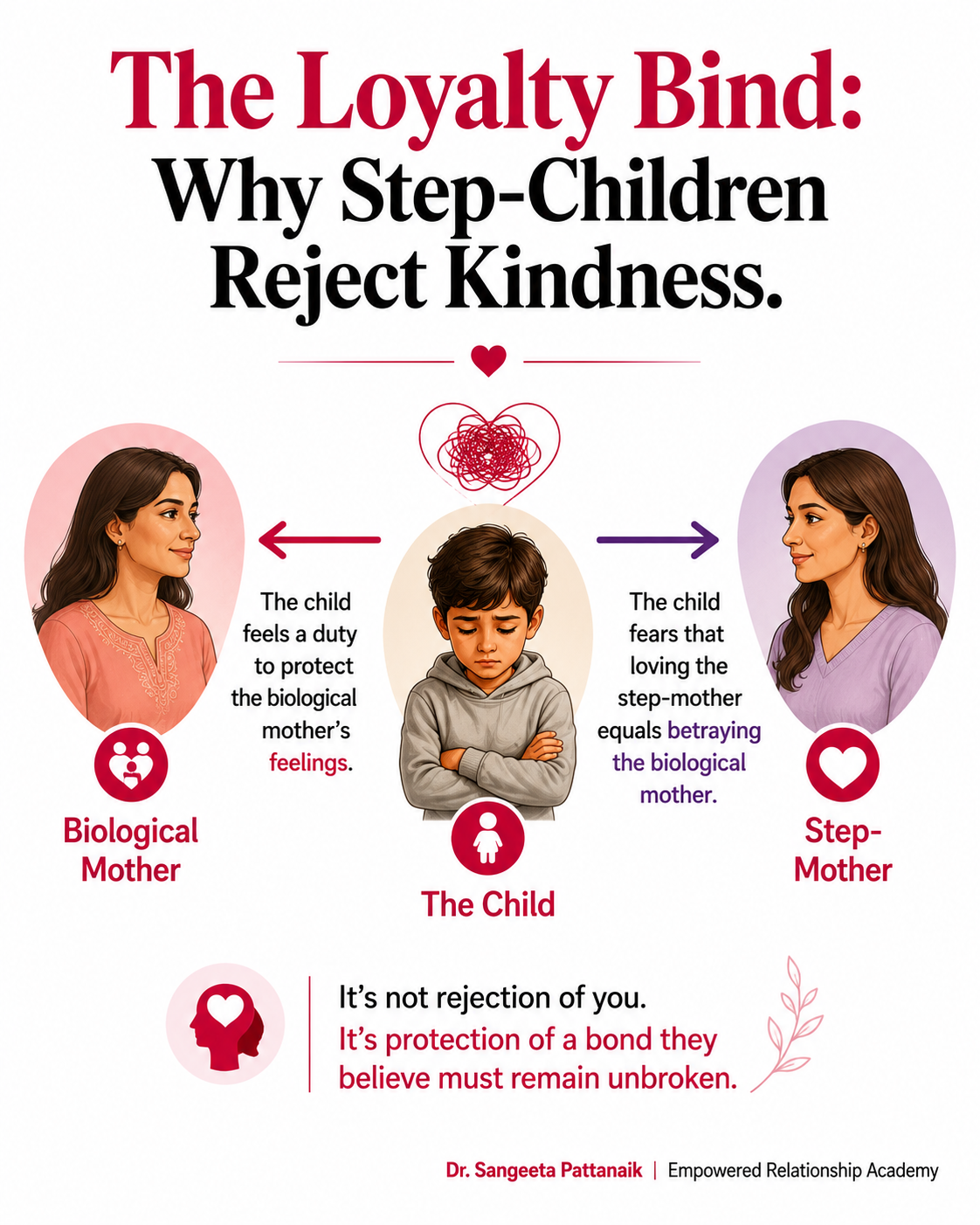
Children of divorce naturally harbor a deep, biological loyalty to both of their original parents. When a step-mother enters the home and is kind, warm, and loving, the step-child actually experiences severe psychological panic.
The Neuroscience of the Loyalty Conflict
In clinical child psychology, this is known as a Loyalty Bind. The step-daughter’s subconscious mind tells her: "If I love my new step-mother, my biological mother will feel betrayed and abandoned by me."
To prove her loyalty to her biological mother, the step-daughter will actively reject, disrespect, or stonewall the new step-mother—even if the step-mother is a wonderful person.
The step-parent must understand that the child's rejection is rarely personal; it is a desperate mechanism of biological loyalty and unhealed grief. When the step-father or step-mother realizes that the step-son’s anger is actually rooted in pain and fear of betrayal, the step-parent can replace their own defensive anger with profound, healing empathy.
4. Navigating the Indian Ecosystem: Grandparents and the "Ex-Spouse" Shadow
Blending a family in India does not just involve a husband, a wife, and children; it involves two massive extended family networks, societal judgment, and the looming shadow of the ex-spouses.
Extended Family Favoritism
One of the most painful dynamics in an Indian blended family occurs when biological grandparents show overt favoritism (e.g., showering a biological grandson with gifts while ignoring the step-granddaughter).
The Marital United Front: The biological parent must take a firm stand with their own parents: "In our home, the biological child and step-child must be treated with equal respect. If the step-child is excluded, we will not attend the family gathering."
Co-Parenting with the "Ex-Spouse"
The presence of a highly conflicted or hostile ex-spouse can poison the new marriage. If the biological parent constantly badmouths the new step-parent, children carry that toxicity into the home.
The Clinical Solution: Establish iron-clad "Grey Rock" boundaries. The new marriage must remain a sanctuary. Communication with the ex-spouse must become strictly logistical, documented, and utterly devoid of emotional reactions.
5. A Therapist’s Roadmap to Blended Harmony
Transforming a chaotic, resentment-filled house into a cohesive, loving step-family is entirely possible, but it requires extreme patience, dropping your ego, and following a structured clinical roadmap.
Step 1: Prioritize the Marital Core Above All Else
In a biological family, children find their security in the fact that their parents are a united front. In a step-family, children will actively try to split the biological parent and the step-parent apart to regain the biological parent's undivided attention.
The Rule: You must protect the marital core at all costs. The biological parent and the step-parent must schedule weekly, private date nights away from the children. If the marriage collapses under the stress of the children, the entire family structure burns to the ground. Your marriage is the foundation; protect it fiercely.
Step 2: Allow the Child to Set the Pace of Affection
Step-parents must drop the expectation of instant love. You cannot force a step-daughter to call you "Mom."
The Strategy of Retreat: If the step-parent pursues the step-child too aggressively for affection, the step-child will retreat. The step-parent must remain warm, consistently polite, and emotionally available, but must allow the step-child to cross the bridge and initiate physical affection or deep conversation at their own biological pace.
Step 3: Establish New, Neutral Family Traditions
A step-family should not simply try to copy the traditions of the old, broken family. Doing so only reminds the children of what they have lost.
The Strategy of Creation: The biological parent, the step-parent, and the children must collaboratively invent entirely new household traditions that belong exclusively to this new family unit. Whether it is a Sunday morning pancake breakfast, a new Diwali ritual, or a specific board game night, these neutral, shared experiences slowly build a new reservoir of joyful memories.

The Beauty of a Chosen Family
Let us conclude with a foundational clinical truth: A blended family is not a "broken" family; it is a beautifully resurrected family.
Building a step-family requires a staggering amount of emotional maturity. It requires a biological parent to fiercely protect their new spouse, and it requires a step-parent to endlessly pour patience and grace into a child who may not immediately say "thank you."
But when a step-parent and a step-child finally cross that bridge—when the step-son voluntarily reaches out to hold the step-father’s hand, or when the step-daughter comes to the step-mother for advice—that bond is uniquely sacred. It is not a bond built on biological obligation; it is a bond built entirely on conscious choice, earned trust, and resilient love.
When you abandon the myth of the instant family, establish clear disciplinary boundaries, and seek professional guidance through blended family counseling when the waters get too rough, you can transform the chaos of remarriage into the most rewarding, peaceful chapter of your entire life.
Take the First Step Before Your Session
The Emotional Invisibility Score™
Discover How Seen, Valued & Emotionally Connected You Feel In Your Relationship.
Navigating the complex loyalties and intense emotions of a blended family requires a rock-solid marital foundation. Before you can successfully unite your household and support your children, you must ensure that you and your new spouse are communicating with absolute emotional clarity and mutual respect. I invite both of you to take this quick, scientifically structured self-assessment. It will immediately map your communication patterns and reveal exactly where your connection needs the most support as you build your new family together.
Discover Your Score NowTakes 2 Minutes • 100% Confidential • Instant Results
Frequently Asked Questions About Blended Families
Why is blending a family so difficult at the beginning?
Blending a family is challenging because the biological parent-child bond predates the new marital bond. Step-parents are entering an already established ecosystem with its own history and shared grief. Expecting an "instant family" is a destructive myth; clinical research shows that a step-family takes between four to seven years to truly stabilize and integrate.
Who should discipline a stepchild in a remarriage?
The biological parent must act as the absolute enforcer of all household rules and discipline. Step-parents have not yet built the deep psychological trust required to hold disciplinary authority. A step-parent should act as an ally and mentor, leaving direct discipline to the biological parent to avoid fracturing the new marriage.
What is a "Loyalty Bind" in a step-family?
A loyalty bind occurs when a child feels that loving or accepting their new step-parent is a betrayal of their original biological parent. To prove loyalty to their original parent, a stepchild may actively reject or disrespect a genuinely kind step-parent. Recognizing this as biological grief rather than a personal attack helps step-parents respond with empathy.
How can we protect our new marriage from blended family stress?
You must prioritize the marital core above all else. Schedule weekly private date nights away from the children, act as a united front against extended family favoritism, establish strict "Grey Rock" boundaries with hostile ex-spouses, and collaboratively invent new, neutral family traditions that belong exclusively to your new household.