
The Rules of "Fair Fighting": A Therapist’s Guide to Conflict Resolution for Couples
Mastering the non-negotiable psychological rules required to protect your connection during your darkest moments.
By Dr. Sangeeta Pattanaik | Read Time: 10 Minutes
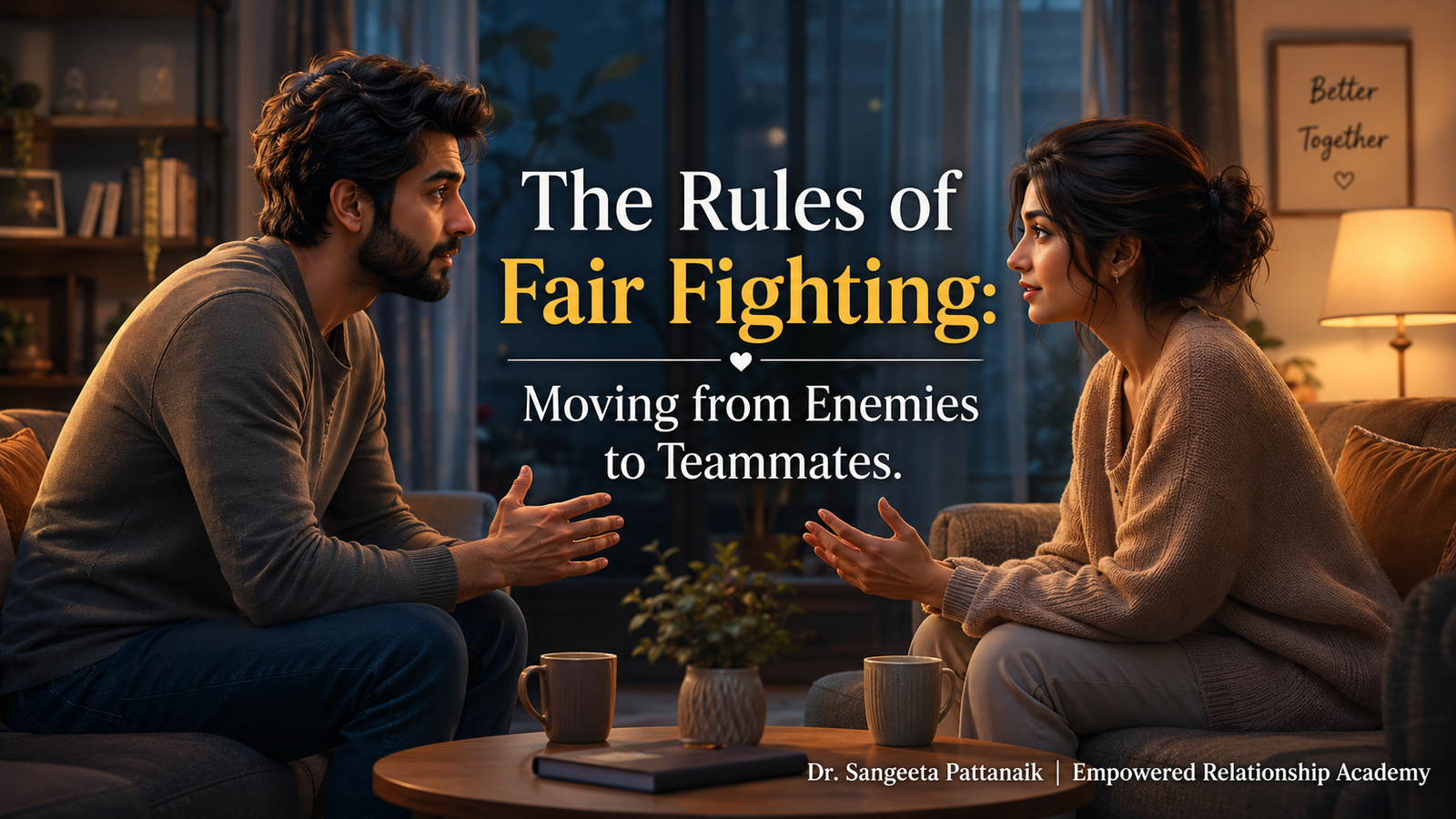
As a clinical marriage therapist, couples often sit on my couch looking deeply ashamed and confess to me, "We fight all the time. We must be failing at this."
Let me share a profound psychological secret with you right now: the healthiest, most passionate, and longest-lasting marriages on earth experience conflict. In fact, a complete absence of conflict is often a massive red flag in my clinic. It usually indicates that a couple has stopped caring enough to argue, slipping into a dangerous state of emotional apathy.
The Psychological Reality of Conflict
The difference between a thriving relationship and a failing one is not whether you fight. The difference is entirely about how you fight. When emotions run high, human beings naturally resort to biological defense mechanisms—we attack, we retreat, and we say things designed to hurt. But love requires discipline.
Mastering conflict resolution couples need to survive requires implementing a strict code of conduct during your darkest moments. We call this "Fair Fighting." If you want to stop damaging your bond every time you disagree, here are the absolute, non-negotiable psychological rules of fair fighting that every couple must learn.
The 5 Rules of Fair Fighting
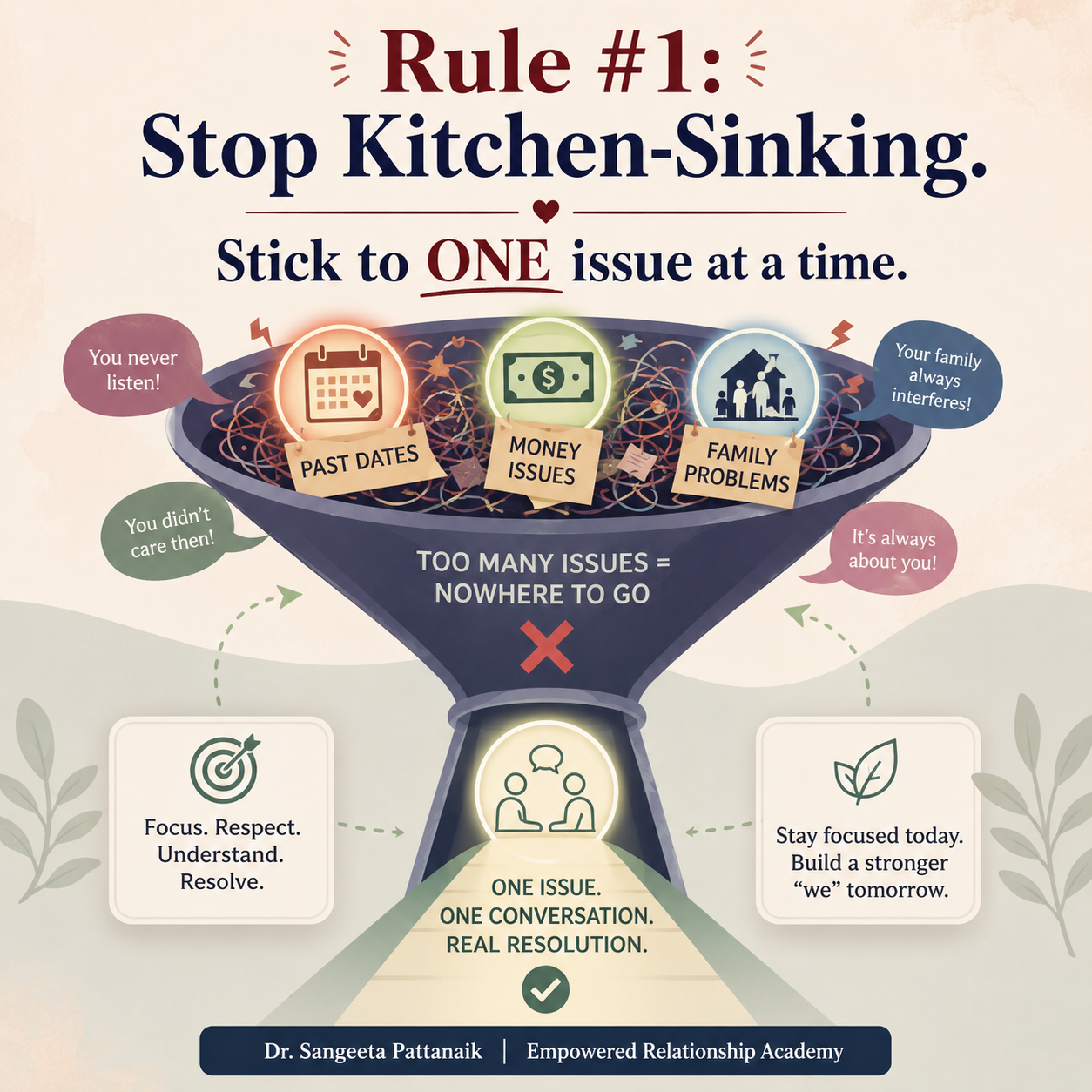
Rule 1: No "Kitchen-Sinking" (Stick to One Issue)
Imagine you are arguing about who forgot to pay the electricity bill. Suddenly, your partner says, "Well, you forgot to book the hotel for our anniversary last year, and your mother was incredibly rude to me at Thanksgiving!" In psychology, this destructive tactic is called "Kitchen-Sinking"—throwing everything but the kitchen sink into the argument.
The Psychological Reality: The human brain has a limited capacity for processing emotional distress, known as Cognitive Load. When you bring up three or four past grievances during a present conflict, your partner’s brain experiences severe cognitive overload. They cannot process the electricity bill, the anniversary, and their mother all at once. The result? Their brain completely shuts down, and the original issue is never resolved.
The Fair Fighting Rule: You must fiercely protect the topic at hand. If you are arguing about the electricity bill, you can only discuss the electricity bill. If your partner brings up the past, gently but firmly redirect: "I hear that you are upset about last year, and I promise we will discuss that later, but right now, we need to solve the issue of the electricity bill."
Rule 2: Ban the Absolute Words ("Always" and "Never")
"You always ignore me when you get home."
"You never help around the house."
These two tiny words are responsible for massive relationship destruction.
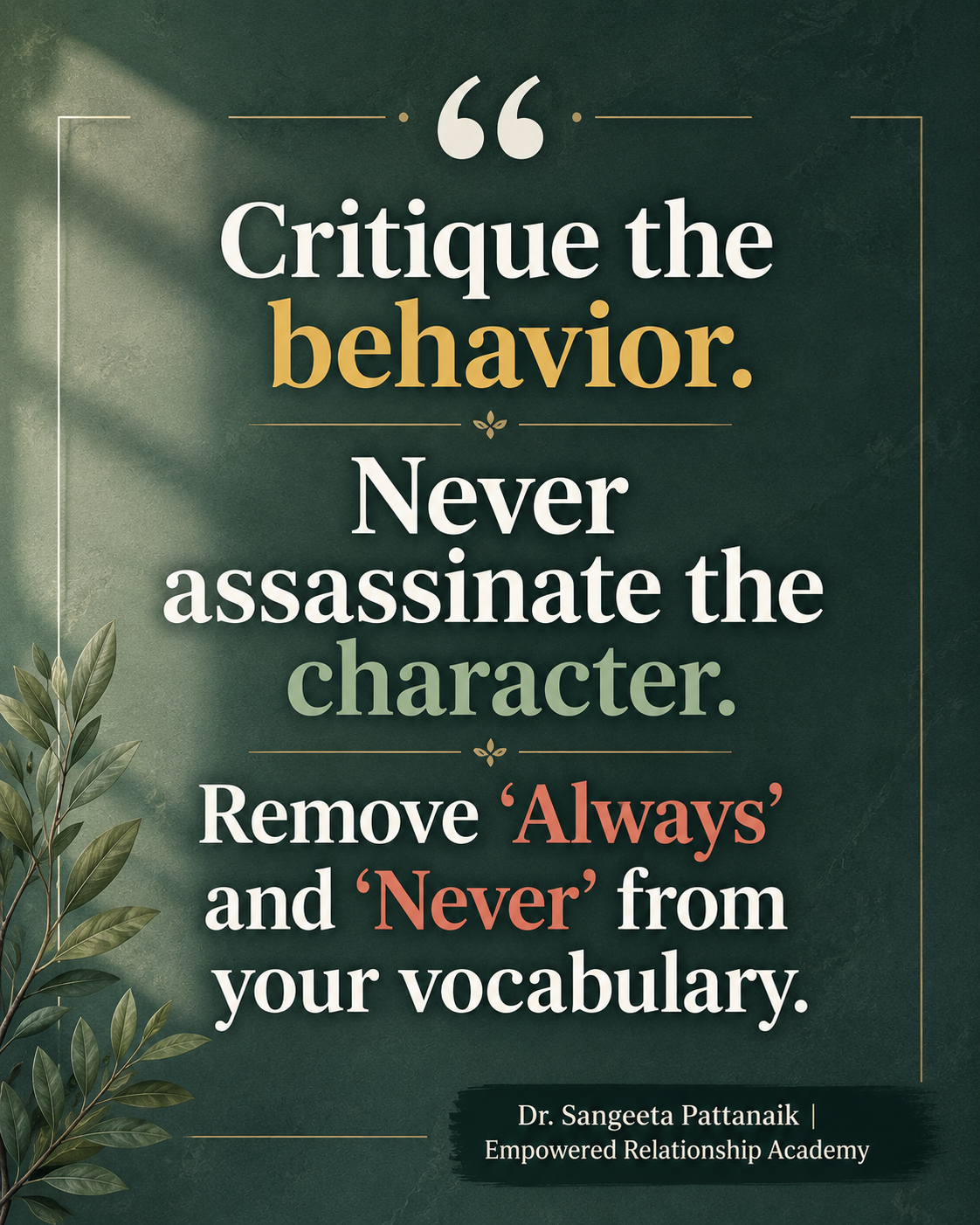
The Psychological Reality: When you use the words "always" or "never," you stop critiquing a specific behavior and start assassinating your partner's character. Logically, your partner knows they don't always ignore you. So, the moment you use an absolute word, their brain stops listening to your underlying pain and instantly shifts into Defensiveness. They will begin compiling a mental list of the three times they did help around the house just to prove you wrong. The entire point of your vulnerability is lost to a technical debate over facts.
The Fair Fighting Rule: Ban these words from your conflict vocabulary. Replace character assassinations with specific, time-bound behavioral observations. Instead of "You never help," say, "I felt really overwhelmed yesterday evening when I had to cook and clean the kitchen by myself."
Rule 3: Validate Before You Debate
During a heated argument, we usually listen simply to wait for our turn to speak. We are silently formulating our counter-attack while our partner is talking.
The Psychological Reality: At the core of every single human being is an intense, primal need to feel understood. In therapy, we call this Psychological Validation. Validation does not mean agreement. You can think your partner is completely wrong about the facts of the argument, but you can still validate their emotional experience.
The Fair Fighting Rule: You are not allowed to make your counter-argument until you have successfully validated what your partner just said.
How to do it: "What I am hearing you say is that when I came home late without texting, you felt incredibly anxious and disrespected. Is that right? I can completely understand why you would feel that way." Once your partner feels genuinely heard, their defense mechanisms drop, and they will finally be open to hearing your perspective.

Rule 4: The 20-Minute Physiological Timeout
Sometimes, despite your best intentions, the argument spirals out of control. Voices raise, tears fall, and mean things are said.
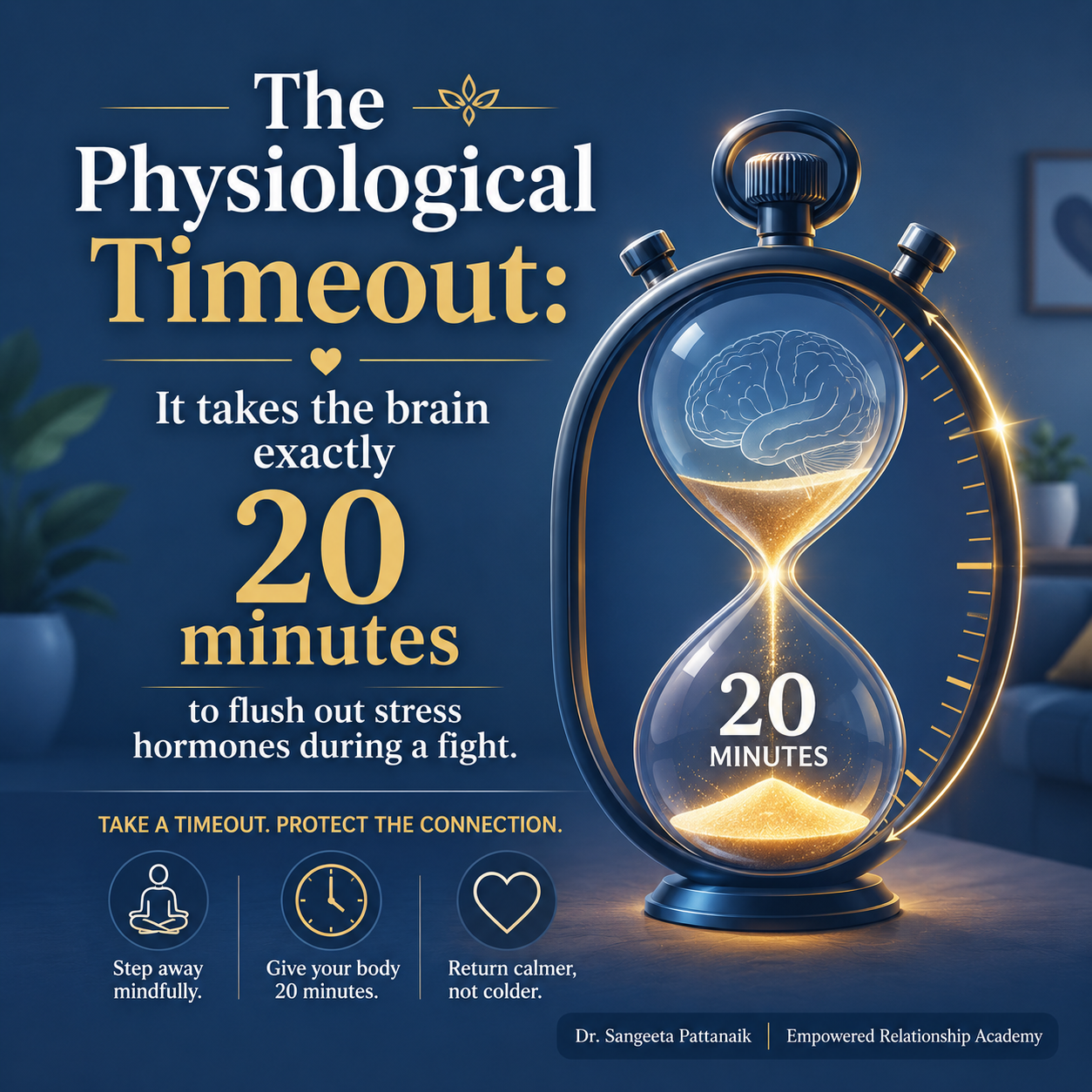
The Psychological Reality: When you reach this state, you are experiencing an Amygdala Hijack. Your brain perceives the argument as a literal threat to your survival and floods your bloodstream with stress hormones like Cortisol and Adrenaline. When this happens, your Prefrontal Cortex (the logical, empathetic, problem-solving part of your brain) essentially shuts down. As a therapist, I tell couples: You cannot negotiate a peace treaty with a nervous system that is preparing for war.
The Fair Fighting Rule: You must implement a strict Timeout rule. If either partner calls a timeout, the conversation must instantly pause. However, it takes the human body a minimum of 20 minutes to metabolize those stress hormones and return to a baseline state of calm.
The Catch: You cannot just walk away and leave your partner in anxiety. You must give a timeline. Say: "I am feeling too overwhelmed to speak kindly right now. I am taking a 20-minute timeout to calm down, and then I promise I will come back to the couch to finish this."
Rule 5: Master the "Soft Start-Up"
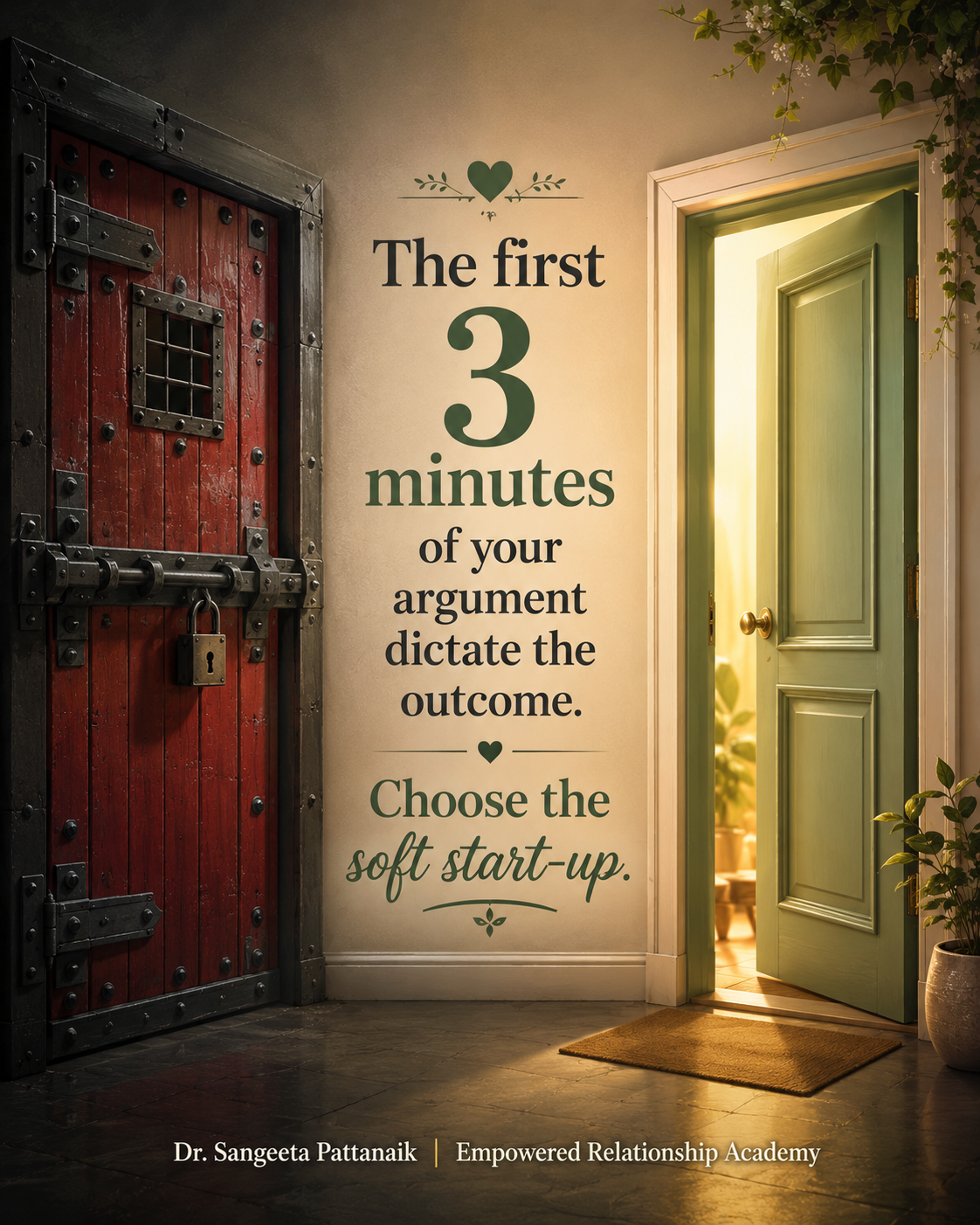
Extensive psychological research by Dr. John Gottman proves that the first three minutes of a conversation determine exactly how that conversation will end 96% of the time. If you start an argument harshly—with blame, criticism, or an elevated voice (a Harsh Start-Up)—the argument is biologically doomed to fail. Your partner's defenses will instantly go up.
Harsh Start-Up (Attack)
"You are so financially irresponsible. Look at this credit card bill!" Focuses on blame and character flaws.
Soft Start-Up (Collaborative)
"I am feeling really anxious about our finances right now looking at this bill. Can we sit down tonight and figure out a better budget together?" Focuses on internal vulnerability.
The Fair Fighting Rule: You must approach conflict with a Soft Start-Up. A soft start-up focuses entirely on your internal feelings, not your partner's flaws.
Fighting for the Relationship
Learning the rules of fair fighting is not about suppressing your emotions or pretending to be perfect. It is about emotional maturity. It is recognizing that the person sitting across from you is not the enemy; the miscommunication is the enemy.
Effective conflict resolution couples use isn’t about winning a debate. In a marriage, if one person "wins" by tearing the other down, both people lose the relationship. The next time you find yourselves locked in a disagreement, take a deep breath, lower your weapons, and remember: you are not fighting against each other. You are fighting for the clarity, depth, and survival of your shared love.
Take the Next Step
The Relationship Readiness Score™
Discover Your Alignment and Psychological Preparedness For Marriage.
To help you gain immediate clarity on the state of your relationship's emotional foundation and communication habits, I highly recommend taking this professional self-assessment. It highlights your conflict resolution strengths and reveals hidden patterns to address together.
Find Your Score NowTakes 2 Minutes • 100% Confidential • Instant Results
Frequently Asked Questions About Fair Fighting
Is it healthy for couples to never fight?
No. A complete absence of conflict is often a relationship red flag. It usually indicates emotional apathy, meaning couples have stopped caring enough to resolve their issues. The healthiest marriages experience conflict but handle it with respect and fair fighting strategies.
What is "Kitchen-Sinking" in relationship arguments?
Kitchen-sinking is a destructive conflict tactic where one or both partners bring up multiple past grievances during a disagreement about a single issue. This causes cognitive overload and prevents the couple from actually resolving the original problem at hand.
Why do therapists recommend taking a 20-minute timeout during heated fights?
When an argument escalates into an "Amygdala Hijack," stress hormones like cortisol and adrenaline flood your system, shutting down the logical, problem-solving part of your brain (the prefrontal cortex). It takes the human body roughly 20 minutes to metabolize these hormones so you can resume communicating calmly.
What is the difference between a "Harsh Start-Up" and a "Soft Start-Up"?
A harsh start-up begins a conversation with blame, criticism, or character attacks, which instantly triggers your partner's defenses. A soft start-up focuses on expressing your internal feelings and vulnerability ("I feel anxious about...") rather than attacking the other person, leading to collaborative problem-solving.
Today in this blog I have learnt about fair fighting rule,where it builds connection over conflict and how we can live our thriving relationship from survival mode.especially the rule 1 was an eye opening one for me.