
The First Steps to Rebuilding Trust After a Betrayal
A clinical psychological roadmap to healing a shattered relationship and forging a resilient, battle-scarred bond.
By Dr. Sangeeta Pattanaik | Read Time: 12 Minutes
As a clinical relationship therapist, I sit across from devastated couples almost every single week. When a couple enters my office in the aftermath of a betrayal—whether it is infidelity, hidden financial ruin, or a long-standing double life—the atmosphere in the room is heavy with shock. The partner who was betrayed is often trembling, unable to sleep, and unable to eat. The partner who committed the betrayal is usually drowning in shame, desperately asking, "Can we fix this right now? Can we just move on?"
I always look them in the eye and give them the harsh, professional truth: No, we cannot fix this right now. You cannot simply apologize for destroying the foundation of your home and expect your partner to sleep comfortably in the wreckage that same night.
Understanding "Attachment Injury"
When a profound betrayal occurs, the pain experienced is not just emotional sadness. In clinical psychology, we call it an Attachment Injury. To the human brain, your primary romantic partner is your ultimate safe harbor. When the person supposed to protect you becomes the source of your deepest pain, your brain registers a massive, life-threatening crisis. The ground beneath you vanishes.
Rebuilding trust in a relationship is not a weekend project. It is a grueling, non-linear journey that generally takes 18 to 24 months of intentional, guided psychological work. However, as a therapist, I can also promise you this: It is possible. I have watched couples walk through the fire of betrayal and forge a bond that is stronger, deeper, and more honest than the one they had before.
If you are standing in the wreckage and truly want to save your marriage, you cannot skip any steps. Here is the complete, psychological roadmap to healing every aspect of a shattered relationship.
Phase 1: The Crisis Phase (Stopping the Bleeding)
Before we can build anything new, we must stabilize the trauma. The immediate aftermath of discovery is about psychological triage.
1. Absolute, Unconditional Accountability
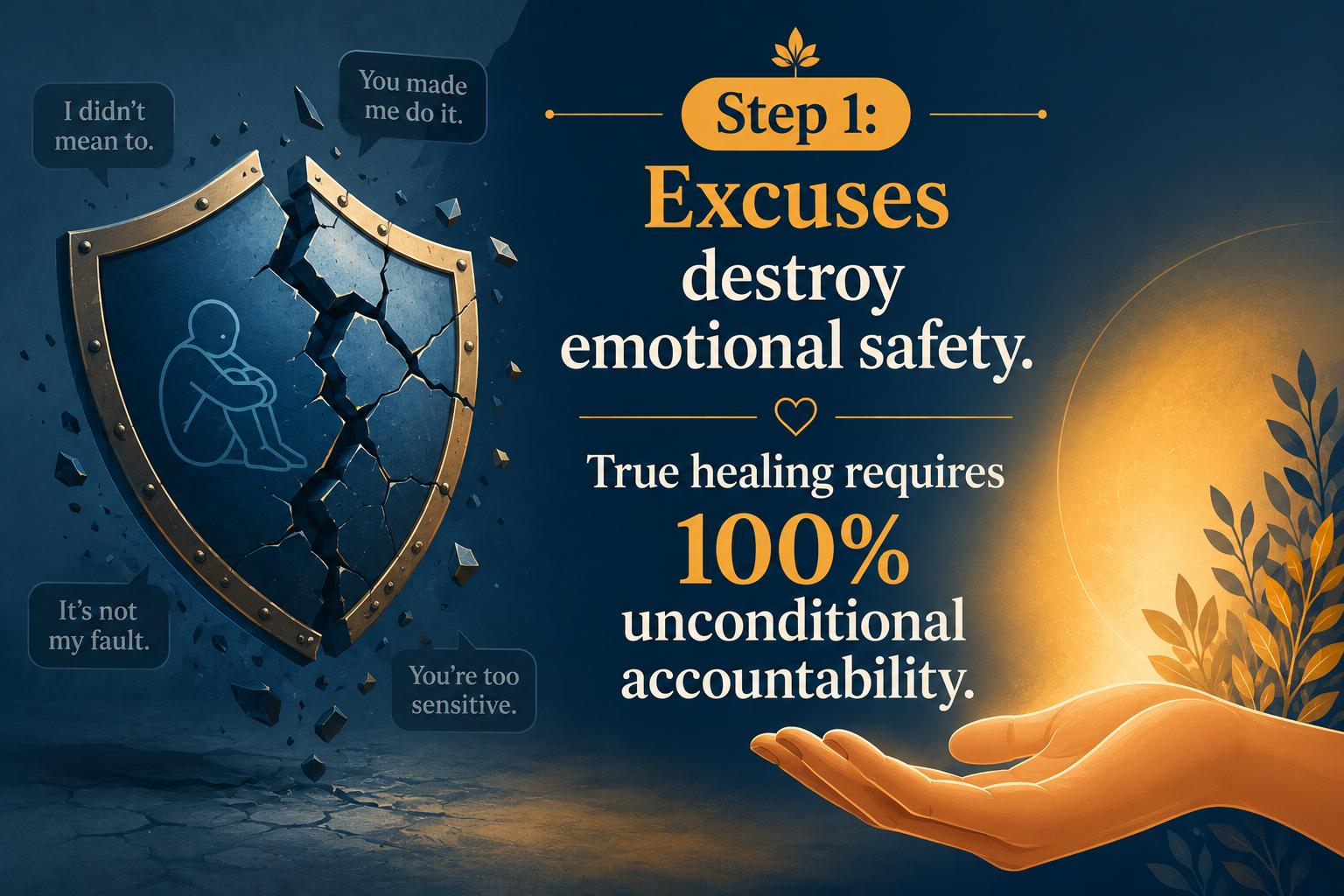
The absolute prerequisite for healing is that the partner who committed the betrayal must fully own the devastation they have caused, without a single excuse or caveat.
Often, the betrayer attempts to soften their actions by saying things like, "I only lied because we were so distant lately," or "It was a mistake, but it didn't mean anything." In psychology, this is called Defensiveness. When you use the word "but" in an apology, you are subtly shifting a percentage of the blame onto the victim or the circumstances. This is toxic to the healing process.
True healing requires the betrayer to transition from Shame (feeling like a bad person, which leads to hiding and defending) to Guilt (recognizing you did a bad thing, which leads to empathy and repair). The betrayed partner needs to hear: "I broke our foundation. I made terrible choices. I am entirely responsible, and I am here to witness your pain without making excuses." Until this happens, the victim's brain will refuse to feel safe.
2. Implementing "Radical Transparency"
Secrecy is the dark environment where betrayal thrives and grows. Therefore, absolute transparency is the only environment where trust can be resurrected.
To rebuild, the betraying partner must willingly surrender their right to complete privacy for an extended period. In clinical therapy, this is known as Radical Transparency. This means giving open, uncomplaining access to phone passwords, bank statements, emails, and daily schedules. It means answering questions about who you are with and where you are going without rolling your eyes or acting annoyed.
The Psychological Reality: The betrayer often feels suffocated, complaining, "You are treating me like a prisoner." But radical transparency is not a punishment. It is a tool for Emotional Regulation. The betrayed partner's amygdala (the brain's threat detector) is in a state of Hypervigilance. When the betrayer happily provides access, it soothes the victim's nervous system, biologically teaching the brain that the danger has passed.

Phase 2: The Processing Phase (Making Sense of the Chaos)
Once the immediate crisis is stabilized, the hardest work begins. The couple must process the trauma without tearing each other apart.
3. Navigating the "Trauma Loop" and Intrusive Thoughts
If you are the partner who was betrayed, you will experience a psychological phenomenon known as Intrusive Thoughts. These are sudden, uncontrollable mental movies or obsessive questions about the betrayal. You might be having a lovely dinner, and suddenly, a visual of your partner lying to you flashes in your mind, sending your heart rate skyrocketing.
This is a hallmark symptom of PTSD (Post-Traumatic Stress Disorder). Your brain is obsessively replaying the traumatic event to try and understand how it missed the warning signs, so it can protect you in the future.
The Therapist's Solution: Do not try to suppress these thoughts; suppressing them makes them stronger. Instead, both partners must agree on a designated time to discuss these triggers. The betrayer must patiently answer the same agonizing questions as many times as necessary, without sighing or saying, "We already talked about this yesterday." Repetitive questioning is the traumatized mind's way of trying to organize a chaotic, broken reality.
4. Uncovering the "Vulnerability Gaps" (The 'Why' Conversation)
Eventually, the couple must answer the most painful question: Why did this happen?
Let me be incredibly clear as a professional: The betrayal is 100% the fault of the betrayer. However, the relationship environment that existed before the betrayal was co-created by both people.
We must look for the Vulnerability Gaps. Were you living like disconnected roommates? Was there a deep lack of emotional intimacy? Was the betrayer using alcohol or external validation to cope with depression? Understanding these vulnerabilities is not about victim-blaming; it is about identifying the cracks in your house so you can seal them and ensure the betrayal can never happen again.

Phase 3: The Rebuilding Phase (Laying New Bricks)
Trust is not magically restored through time. Time does not heal all wounds; intentional action heals wounds.
5. Earning Trust Through "The Jar of Marbles"
A common mistake couples make is attempting to fix a betrayal with grand gestures—an expensive European vacation, buying a new car, or a dramatic vow renewal ceremony. But human psychology tells us that trust is never rebuilt in massive, dramatic leaps.
Renowned researcher Dr. Brené Brown describes trust as a "Jar of Marbles." Trust is earned in the smallest, seemingly insignificant moments of daily life.
- It is calling exactly at 5:00 PM if you said you would call at 5:00 PM.
- It is noticing your partner is triggered by a movie scene and gently holding their hand.
- It is telling the absolute truth about something minor, even when a small lie would be easier.
Every time the betrayer follows through on a small promise, they place one single marble in the jar. Rebuilding trust in a relationship requires thousands of these tiny, consistent actions. Consistency is the only currency that buys back trust.

6. Separating "Forgiveness" from "Trust"
One of the greatest misconceptions I correct in therapy is the idea that forgiveness and trust are the same thing. They are completely different psychological processes.
Forgiveness (Internal)
A gift you give to yourself. It is the conscious decision to let go of bitterness and the desire for revenge. You can forgive someone instantly to free your own soul from anger.
Trust (External)
An external metric that must be earned through evidence and time. It is the verified belief that a person is safe and will protect your well-being.
You can say to your partner: "I forgive you for what you did, but I do not trust you yet. You still have to prove to me over time that you are a safe person." Do not let anyone rush you into trusting them just because you have chosen to forgive them.
Phase 4: The Integration Phase (Moving to Marriage 2.0)
7. Grieving the Old Marriage to Build a New One
Perhaps the hardest clinical truth my clients have to accept is this: You can never, ever go back to the way things were.
Couples often cry on my couch and say, "I just want our old relationship back. I want to feel normal again." But I remind them that the "old relationship" had a fatal flaw that allowed the betrayal to happen in the first place. That naive version of your marriage is dead, and you must deeply grieve its passing.
What you are doing now is building Marriage 2.0. You are taking the raw materials of your shared history and constructing an entirely new dynamic—one that is based on harsh truths, radical vulnerability, and incredibly strict boundaries.
A Final Word from the Therapist's Chair
Surviving a betrayal is one of the most agonizing experiences a human heart can endure. The road ahead is steep, exhausting, and filled with days where you will want to give up.
But as a therapist who has guided hundreds of couples through this exact darkness, I want to leave you with profound hope. When both partners commit to the grueling, humbling work of radical honesty and profound empathy, a shattered relationship can reform into something magnificently resilient. It will not be the innocent, blind love you had on your wedding day. It will be a tested, battle-scarred love—a mature bond forged in the intense fire of truth, built by two people who looked at the absolute worst in each other, and chose to stay and fight for the relationship anyway.
Take the Next Step
The Relationship Readiness Score™
Discover Your Alignment and Readiness for the Healing Journey.
To help you gain immediate clarity on the state of your relationship's emotional foundation and vulnerability gaps, I highly recommend taking this professional self-assessment. It highlights your alignment strengths and reveals the hidden emotional gaps to address in therapy.
Find Your Score NowTakes 2 Minutes • 100% Confidential • Instant Results
Frequently Asked Questions About Rebuilding Trust
What is an Attachment Injury in a relationship?
In clinical psychology, an attachment injury occurs when the person who is supposed to be your primary safe harbor (your partner) suddenly becomes the source of your deepest pain. Your brain registers this betrayal as a massive, life-threatening crisis, triggering intense feelings of trauma and unsafety.
How long does it take to rebuild trust after infidelity or betrayal?
Rebuilding trust is a non-linear process that generally takes 18 to 24 months of intentional, guided psychological work. It requires absolute accountability from the betraying partner and consistent, daily actions to rebuild the relationship's emotional foundation.
What is "Radical Transparency" and why is it necessary?
Radical transparency involves the betraying partner willingly surrendering their right to privacy by giving open access to phones, schedules, and finances. It is a psychological tool used for emotional regulation, biologically teaching the betrayed partner's hypervigilant nervous system that the threat is gone.
Are forgiveness and trust the same thing?
No. Forgiveness is an internal decision to let go of bitterness and anger—it is a gift you give to yourself. Trust, however, is an external metric. It must be actively earned over time through consistent, reliable behavior and evidence of safety.