
How Having Children Changes Your Marriage (And How to Thrive in Your Marriage After Kids)
Navigating the neurobiological earthquake, cultural shifts, and relationship traps of modern parenthood.
By Dr. Sangeeta Pattanaik | Read Time: 15 Minutes
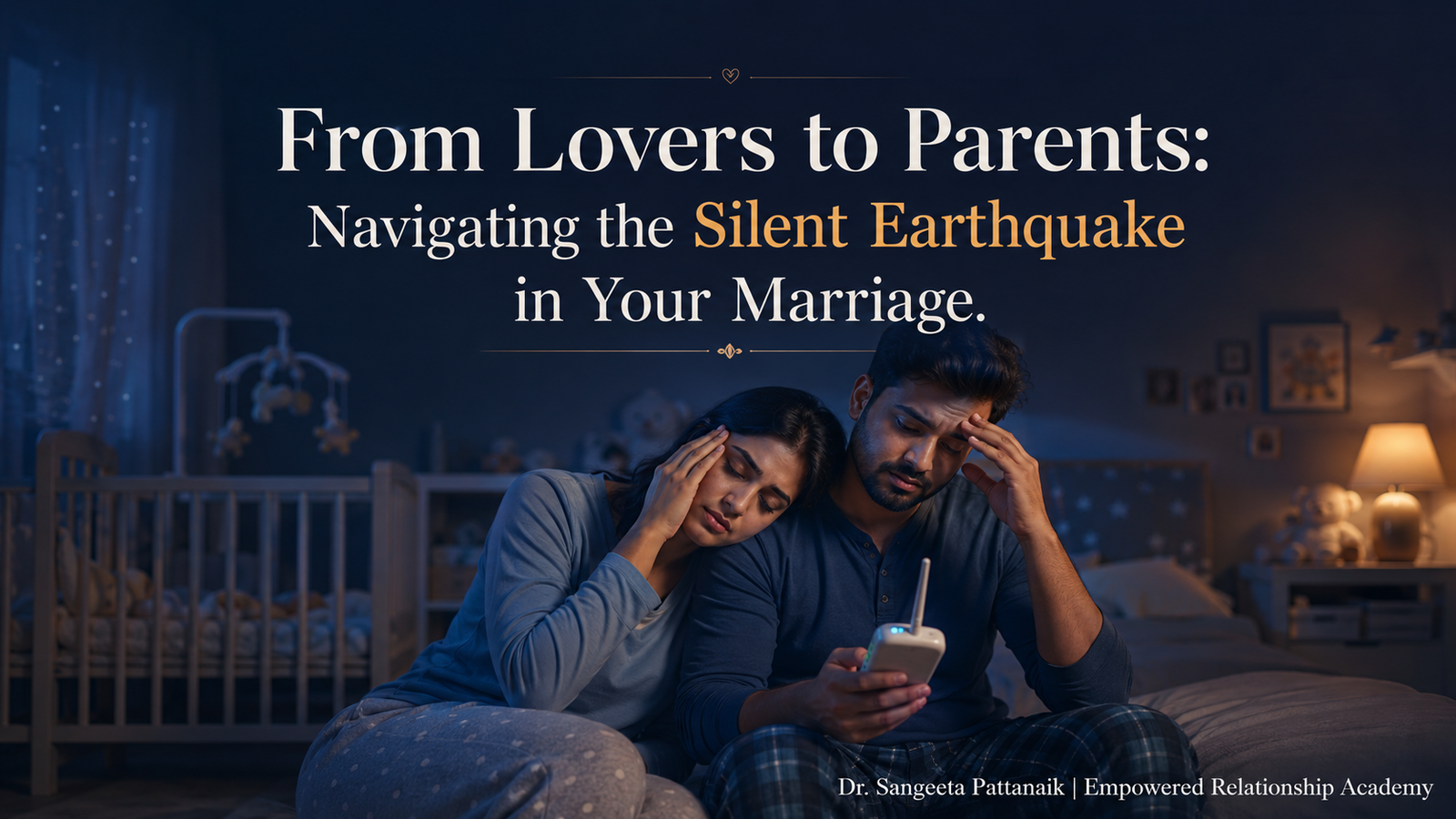
In our Indian culture, the arrival of a baby is celebrated as the ultimate completion of a family. Grandparents rejoice, sweets are distributed across the neighborhood, and the entire household revolves around the tiny new life. Yet, behind the closed doors of modern urban bedrooms, thousands of new parents are secretly drowning in a profound relationship crisis.
In my clinical practice as a relationship therapist, I hear the same heartbreaking confession almost daily from couples in their late twenties and thirties: "Dr. Sangeeta, we love our baby endlessly, but we feel like completely different people. We are fighting constantly, the intimacy is completely gone, and we feel more like exhausted co-workers than a married couple."
You Are Not Failing
Let me normalize this for you immediately: You are not failing, and your marriage is not broken. Extensive psychological research confirms that the transition to parenthood is the single most severe biological, psychological, and relational stress-test a marriage will ever endure. Studies consistently show that roughly 67% of couples experience a precipitous drop in marital satisfaction during the first three years of a child's life.
When couples search for advice on navigating marriage after kids, they are usually fed superficial tips like "go on date nights" or "sleep when the baby sleeps." But to survive this massive life transition, you need significantly more than surface-level advice. You need to understand the deep neurological, cultural, and psychological shifts happening beneath your roof. Let us examine exactly why a baby rewires your relationship—and how you can protect your marital bond from collapsing under the weight of exhaustion.
1. The Neurobiological Earthquake: Why You Feel Like Different People
When a baby is born, it is not just a child entering the world; two entirely new psychological identities are born alongside them. If you feel like your spouse is suddenly acting like a stranger, it is because their brain and hormone chemistry have fundamentally altered.
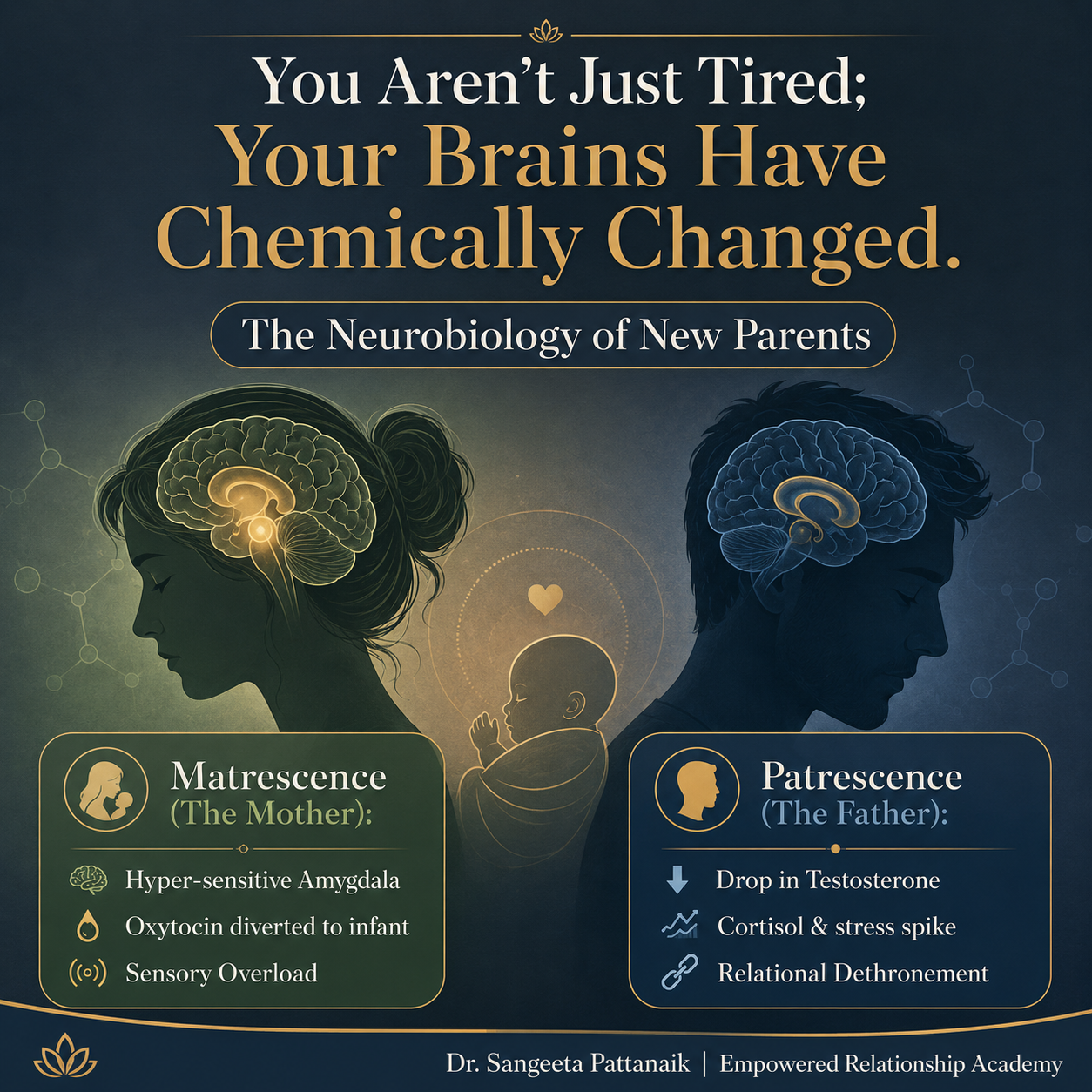
"Matrescence" (The Mother's Brain)
Much like adolescence, matrescence is a period of massive hormonal upheaval and identity restructuring:
- The Oxytocin Monopoly: During childbirth and breastfeeding, a mother’s brain is flooded with Oxytocin, redirected almost entirely toward survival and attachment with the infant. Emotional warmth once reserved for her husband is temporarily diverted to the baby.
- Amygdala Hyper-Vigilance: Her Amygdala (threat detector) literally enlarges and becomes hyper-sensitive. Her nervous system is on permanent high alert, leaving her feeling chronically overwhelmed and emotionally drained.
"Patrescence" (The Father's Shift)
Fathers also undergo a significant physiological transition known as patrescence:
- The Testosterone Drop: Involved fathers experience a natural drop in Testosterone levels coupled with a spike in cortisol and vasopressin. This makes men more protective, but often leads to irritability, lowered libido, and feelings of inadequacy.
- The "Dethronement" Shock: Because the baby requires 100% of the mother's attention, husbands often experience an unconscious shock called Relational Dethronement—moving from the center of attention to the periphery, triggering silent resentment.
2. The Indian Cultural Reality: Extended Family and Gender Roles
While parenthood challenges couples globally, navigating marriage after kids within the traditional and modern Indian ecosystem presents unique psychological hurdles that Western relationship books completely ignore.
The Resurgence of Traditional Gender Roles
In modern urban India, many couples operate as egalitarian partners before childbirth—both building careers, sharing household chores, and enjoying equal financial independence. However, the moment a baby arrives, couples often default into rigid, traditional gender roles without ever discussing it: the mother's world shrinks to infant care, feeding schedules, and managing household help, while the father's world shifts toward intense financial pressure and longer corporate hours. When these roles rigidify, couples stop viewing each other as partners and begin viewing each other from across a cultural divide, leading to profound emotional isolation.
Navigating In-Law Dynamics and the "Japa" Period
In Indian tradition, the postpartum period (often called Japa, Sutika, or confinement) heavily involves grandmothers, aunts, and extended family moving into the home or taking the mother and baby to the maternal home for months.
The Marital Eclipse: While the physical help of extended family is a massive blessing, it often creates severe boundary issues. Well-meaning elders frequently take over parenting decisions or override the husband’s role entirely. When extended family engulfs the household, the husband and wife lose their private physical and emotional space, leaving zero opportunity for intimacy or private conflict resolution.
3. Why Spontaneous Intimacy Dies (The Science of "Sensory Overload")
One of the most universal sources of tension in a marriage after kids is the sudden, jarring disappearance of physical intimacy and sex. When a husband reaches out to hold his wife or initiate intimacy at the end of the day, she may pull away, snap, or act completely cold. To the husband, this feels like rejection and a lack of love. To the wife, it feels like yet another demand on an already exhausted body.
Understanding "Touch Out" and Sensory Overload
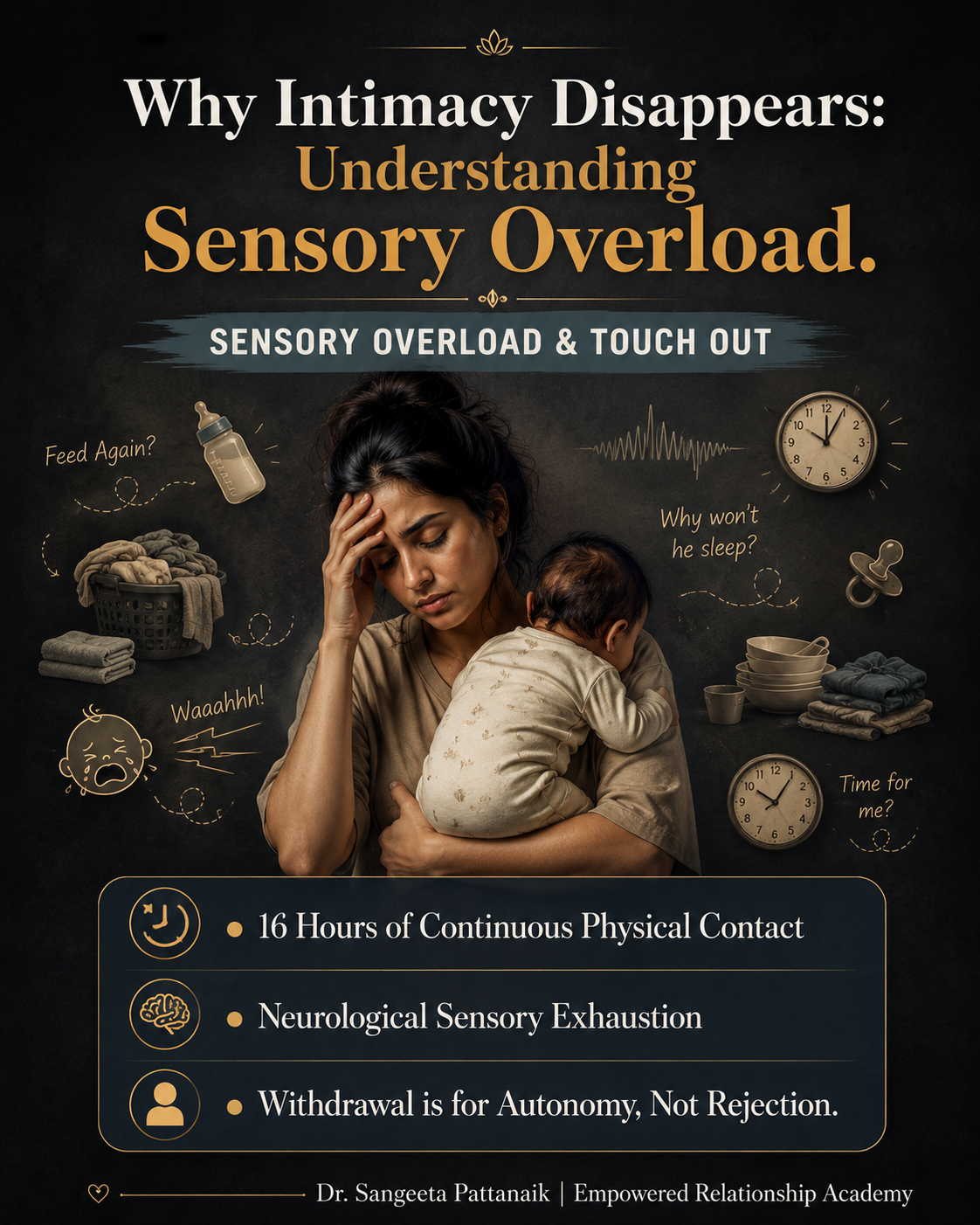
To solve this conflict, both partners must understand a clinical phenomenon known as being "Touch Out" or experiencing Sensory Overload. Consider a mother's daily physical reality: for fourteen to eighteen hours a day, her body is not her own. She is carrying a baby, nursing, wiping spit-up, rocking a crying infant, and constantly monitoring physical safety. Her neurological nervous system is bombarded with continuous sensory stimulation.
By 10:00 PM, her brain has reached its absolute sensory threshold. When her husband reaches out for a romantic touch, her nervous system does not register it as affection; it registers it as another physical demand on a depleted body. Her withdrawal is not a rejection of her husband's love—it is a desperate biological cry for bodily autonomy and sensory rest.
4. Four Dangerous Relationship Traps After Childbirth
When sleep deprivation, hormonal shifts, and cultural pressures collide, couples easily fall into destructive communication traps. In therapy, we identify four major pitfalls that destroy marital intimacy during the early parenting years:
Trap 1: Keeping a Scorecard
The Olympic Contest: Keeping a silent, resentful scorecard of suffering ("I woke up three times; you only woke up once").
The Reality: This transactional mindset turns your marriage into a competition where whoever is more exhausted "wins," destroying mutual empathy.
Trap 2: Maternal Gatekeeping
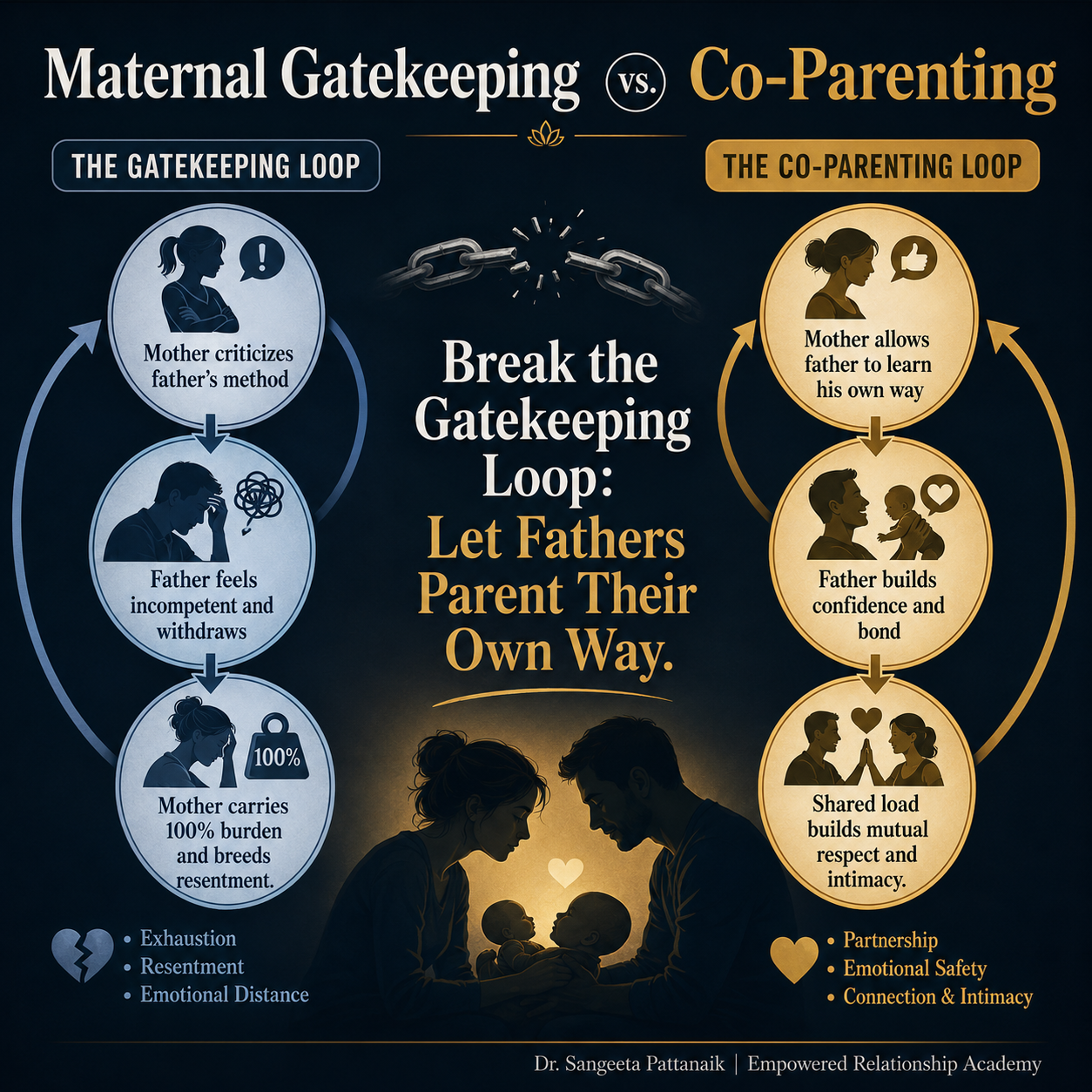
The Control Loop: Believing only the mother knows the "right" way to care for the baby, constantly correcting or pushing the father aside.
The Reality: The father feels incompetent and stops trying to help, leaving the mother with 100% of the burden and massive resentment.
Trap 3: Child-Centric Marriage
The Sacrifice Myth: Making the child the sole center of the universe, abandoning hobbies, alone time, and marital connection.
The Reality: A child's greatest security is observing a loving marriage. Neglecting the core builds a fragile family that collapses later.
Trap 4: Cognitive Labor
The Mental Load: Dividing physical chores but ignoring the exhausting mental management of vaccinations, supplies, and schedules.
The Reality: In 88% of marriages, this mental load falls entirely on the mother, breeding profound, silent resentment while her partner "waits for instructions."
5. How to Survive and Thrive: A Therapist’s Roadmap for Parents
Rebuilding a thriving marriage after kids does not require grand romantic vacations or weekend getaways that you cannot currently afford or schedule. It requires intentional, micro-adjustments to your daily domestic routines. Here is your clinical survival guide to protecting your partnership:
Strategy 1: Replace the Scorecard with "We vs. The Exhaustion"
You must actively dismantle the exhaustion scorecard. Make a conscious mindset shift: You are not fighting against each other; you are two exhausted teammates fighting against a difficult biological season of life.
The Daily Practice: Whenever your partner looks overwhelmed, instead of comparing their exhaustion to yours, ask one simple question: "What can I take off your plate for the next thirty minutes so you can breathe?" Generosity breeds reciprocal generosity.
Strategy 2: Implement "Micro-Moments" of Connection
When you lack the time and energy for a two-hour date night, you must rely on Micro-Moments of nervous system co-regulation:
- The 6-Second Kiss: Do not let physical greetings be a quick peck on the cheek as you rush past each other with baby bottles. Commit to one 6-second kiss every day. Clinical research proves that kissing for six continuous seconds stops the brain's alarm system and stimulates oxytocin release, reminding both of you that you are romantic lovers, not just logistics partners.
- The 20-Second Hug: Embrace each other in silence for twenty seconds every evening. Physical pressure without sexual demands lowers cortisol and restores emotional safety.
Strategy 3: Establish a Daily "Logistics-Free Zone"
When couples only communicate about baby schedules, grocery lists, and financial bills, they slip into roommate syndrome.
The Rule: Spend exactly 15 minutes every evening together without smartphones and without the baby (even if you are just sitting on the balcony after the child falls asleep). During these fifteen minutes, talking about the baby, household chores, or family logistics is strictly forbidden. You must ask about each other's inner thoughts, feelings, or simply sit in quiet, loving companionship.
Strategy 4: Protect Your Marital Boundary with Extended Family
If extended family is helping with childcare, you must establish respectful, firm boundaries to protect your identity as a couple. Agree in private on your parenting rules, feeding philosophies, and privacy boundaries before extended family arrives. If an elder criticizes your parenting or invades your marital space, the partner whose family it is must step up and handle the communication with love and firmness. Never let family interference divide you as a team.

From Surviving to Thriving: A New Chapter of Love
Let us be abundantly clear: Having a child does not ruin a good marriage; it exposes the existing cracks and demands a higher level of emotional maturity.
The spontaneous, effortless romance you enjoyed before children is gone, but what can take its place is something infinitely more profound. Navigating the sleepless nights, the financial pressures, and the domestic chaos side-by-side transforms your relationship from a lighthearted romance into an unbreakable, battle-tested partnership.
When you stop keeping score, understand the neurological changes happening in your brains, respect each other's physical exhaustion, and prioritize tiny daily moments of connection, your marriage after kids will not just survive—it will become the deepest, most rewarding chapter of your entire lives.
Take the First Step Before Your Session
Emotional Invisibility Score™
Discover How Seen, Valued & Emotionally Connected You Feel In Your Relationship.
Navigating the transition to parenthood can leave you feeling emotionally disconnected from the person you love most. Understanding how deeply this life change has impacted your marital bond is the very first step toward rebuilding true intimacy. Before making assumptions about your relationship's communication health, I invite both of you to take this quick, scientifically structured self-assessment. It will immediately reveal your underlying emotional patterns and highlight where your connection needs the most support during this parenting journey.
Discover Your Score NowTakes 2 Minutes • 100% Confidential • Instant Results
Frequently Asked Questions About Marriage After Kids
Why is my marriage struggling after having a baby?
It is completely normal. Research shows roughly 67% of couples experience a drop in marital satisfaction in the first three years after having a baby. This is driven by intense biological shifts like "matrescence" and "patrescence," sleep deprivation, hormonal changes, and the sudden loss of personal time and physical intimacy.
What is "matrescence" and how does it affect a wife?
Matrescence is the developmental, hormonal, and neurological transition a woman goes through when becoming a mother. Her brain's amygdala (threat detector) enlarges, keeping her on constant high alert, while her bonding hormone (oxytocin) is directed almost entirely toward infant survival, often leaving her feeling overwhelmed and temporarily less focused on romantic intimacy.
What does feeling "touch out" mean for new mothers?
Being "touch out" is a state of sensory overload. When a mother holds, nurses, and cares for an infant for 14 to 18 hours a day, her nervous system reaches its absolute stimulation threshold. By evening, physical touch from a spouse can register as another physical demand on an exhausted body rather than affection, requiring sensory rest and bodily autonomy.
How can couples stay connected without much time or energy?
Couples can thrive by relying on daily "micro-moments" of connection, such as a 6-second kiss or a 20-second silent hug, which biologically stimulate oxytocin and lower stress hormones. Additionally, creating a 15-minute daily "logistics-free zone" where talking about chores, bills, or the baby is forbidden helps maintain emotional intimacy.